

The brand new year always brings a range of emotions for me. At times I’ll look back and see what I’ve accomplished, what I should have accomplished, and what ways I can improve myself for the future. A new year can bring many opportunities for change and improvement. We can reflect on our past and learn to grow for the better. Sometimes the challenges we faced in the past made us better and helped us see the “bigger picture”. Other times our challenges drained us and left us with even more doubts and questions.
Whatever paths you went through in 2024, don’t let it hinder you from making a brighter and better 2025. This year, I want to focus more on my sustainability efforts and I hope to help others crossover into this journey or help them grow. Our choices define us in a way that can lead to better decisions in the future, or hinder us from growing. Our actions can speak to others and ourselves, telling stories that can either help or prevent growth.
The year 2025, surprisingly also the year of the Snake in the Lunar calendar, signifies wisdom, growth, and transformation. Much like the snake that sheds its outer layer to transform into something newer, it also symbolizes growth and change. Change can bring positive and negative outcomes. But it’s up to us to decide how we want to make positive changes for the present and the future.
Sustainability is a big action, a giant movement. It is one of the most basic forms of survival. But in the sense of sustainability for the environment, we must bolster our efforts to protect our future generations. Sustainability for the environment is, the quality of causing little or no damage to the environment and therefore able to continue for a long time. Being sustainable can be as simple as necessary, or as complicated and intricate as you continue with planning and preserving the environment. Below I’ve listed some easy sustainability efforts, as well as stepping up to more complicated actions that you can take.
5 EASY WAYS TO CHOOSE SUSTAINABLE ACTIONS:
1- Conserve what you have. This philosophy helps with buying less, spending less, and using less. Conservation starts with knowing the needs of your family, yourself, your workplace, and anywhere you’d like to take on conservation. Start by analyzing where you are NOT conserving. For instance, are your utility bills too high? See where you can scale back usage and conserve in areas that are safe and sustainable for you and your family. Here’s a helpful article on conserving water in your home and/or business. You can apply some of these techniques with your other utilities as well: https://earth911.com/home-garden/conserving-water-at-home/
2 – Choose to Reduce, Reuse, and Recycle. If we want our planet to thrive for our future generations, we must choose to be kinder to our planet. Reduce the need for excess waste and materials that are not compostable or easily recyclable/reusable. Reuse what you have and swap with others when possible. By reusing an item indefinitely, we can reduce our need to buy more. But we careful of what you are reusing. Choose materials that are safe to reuse such as cotton, aluminum, glass, and wood. Recycle whenever you can and choose facilities that can recycle as many materials as possible. Most recycling facilities take back materials such as aluminum, glass, paper, wood, metal, and so forth. Be sure to check with your county’s recycling centers.
3 – Buy wisely. As consumers, we have the biggest influence in consumer product goods. When we choose to buy from brands that are environmentally responsible and promotes sustainable actions, we are telling businesses that we want them to be responsible and hold to their values and ethical actions. To take this further, we’ll discuss this in the advanced action steps.
4 – Learn the difference between Organic and Non-GMO. Organic products are products made from organic agriculture and companies must go through a rigorous certfication in order to be certified as organic. Organic food is grown without the use of synthetic chemicals, such as human-made pesticides and fertilizers, and does not contain genetically modified organisms, also known as GMOs. GMO, or genetically modified organism, is a plant, animal or microorganism that has been subjected to biotechnology. While GMO products are quite controversial, with people debating the necessity of this practice versus the dangerous side effects of it, it’s best to choose organic products due to the entire system of process that a certified organic product must go through. This means a cleaner and more sustainable environment for people, animals, and planet.
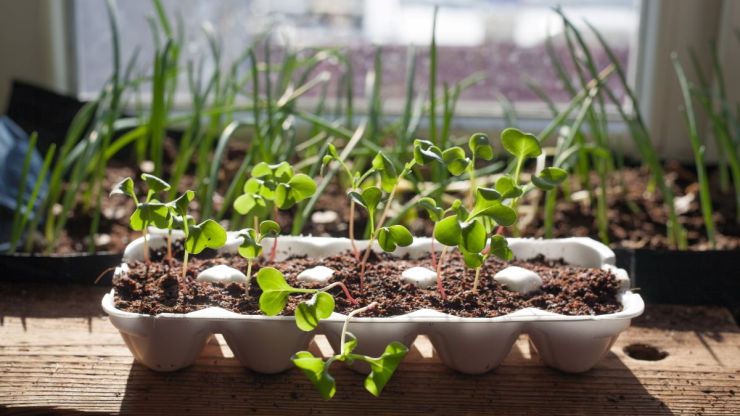
5 – Grow your own food. You’ve probably already read my posts that promote gardening and growing your own food. There are many benefits to growing your own fruits and vegetables, such as health reasons, sustainability, biodiversity, and just the pure joy of eating fruits and vegetables that were ripened on the branch rather than in the grocery store. In addition, you can grow what you love to eat or try out new crops throughout the years.
5 ADVANCED WAYS TO MAKE SUSTAINABLE ACTIONS:
1 – Choosing ethically made products. I mentioned earlier that consumers have great power in sustaining a business or company. We can choose to support a brand that aligns with our values or reject brands that are detrimental to the environment. But we don’t always get to pick and choose what brands to buy from, and that’s okay too as long as you educate yourself and become more aware of who you’re buying from. Most products are made for mass consumption. In the world of convenience mentality especially in the US, we buy products that save us time, but not necessarily saves our money and health. Do your own research on how companies make their products. This ranges from greenhouse emissions from their factories to how and where they source their raw materials.
2 – Teach your children and future generations. When you leave this world do you wish for a great future for your children and all future generations? Start educating your children at a young age to be advocates for the environment, their health, and their own well being. Education begins at home and it’s our job as parents to give our children an opportunity for a bright future. Teach your children the importance of eating healthy, of less waste, and understand fundamental roles as a caregiver of the planet.
3 – The impact of the meat industry. According to Earth911, The average American eats approximately 226 pounds of meat per year, and they are expected to eat even more – 233 pounds – by 2033. Food accounts for 10% to 30% of our household carbon footprint, and meat accounts for more than half of that. If you choose to eat meat in your meals, try to eat ones that produce less carbon footprint, which in turn can help minimize environmental damage. Beef produces the most product emissions which occurs in processing, transport, retail, cooking, and waste disposal. Pork and poultry produce much less carbon footprint, and seafood varies by type and how they are farmed/caught. To learm more about seafood impact on the environment, check out SeafoodWatch.org
4 – Upcycling. Upcycling is a method of repurposing what you already have instead of throwing them away. The latest trend of upcycling is upcycled food. You might be surprised at how much food is wasted each year in the US, let alone all over the world. Companies are upcycling their food products by using their not-so-perfect fruits and vegetables and producing them into dried fruit, dried soup packets, and so forth. Or they are commissioning farms to save their less perfect produce to be turned into upcycled food products. By upcycling what you already have, you can save money and resources and produce less waste in the environment.

5 – Make your business and company more sustainable. If you have the chance to make the world a better place, would you do it? Sure, you can start at home and with your own family and friends, but companies and businesses can produce A LOT of waste. A business should be responsible for their environmental impact. Afterall, they rely mostly on consumers and the needs of their customers. The energy used to extract, process, and ship raw materials for use in products, along with all the impacts along the supply chain account for the majority of greenhouse gas emissions globally. That also means that business can make the biggest difference simply by deciding to reduce extraction by switching to circular approaches to materials and to decarbonize industrial processes. For more info on how to change your company’s environmental impact, check out: Earth911
We only have one planet, but an abundance of opportunities to take positive actions. Educate yourself on the impact of your own carbon footprint, and take on ways to do more sustainable actions.
Disclaimer: The product(s)were sent to the author for review by the manufacturer/PR. All reviews on “Happymomblogger” remain unbiased and unpaid and are the sole decision of the author. The opinions of these product(s) were not influenced in any way, shape, or form. As always, please read the ingredients carefully when trying new products.
Please read the labels and ingredients carefully and follow all manufacturer’s instructions (if any). The products selected for the giveaway were generously donated by the companies/PR to help readers learn more about their products. The winner’s choice in using/consuming these products are entirely up to the winner and will not hold the author and her family liable nor the companies/PR liable. These products are made with non-toxic ingredients but always be safe with what you use and consume.



 Happymomblogger