Take the 30-Day Zero-Waste Earth Month Challenge!

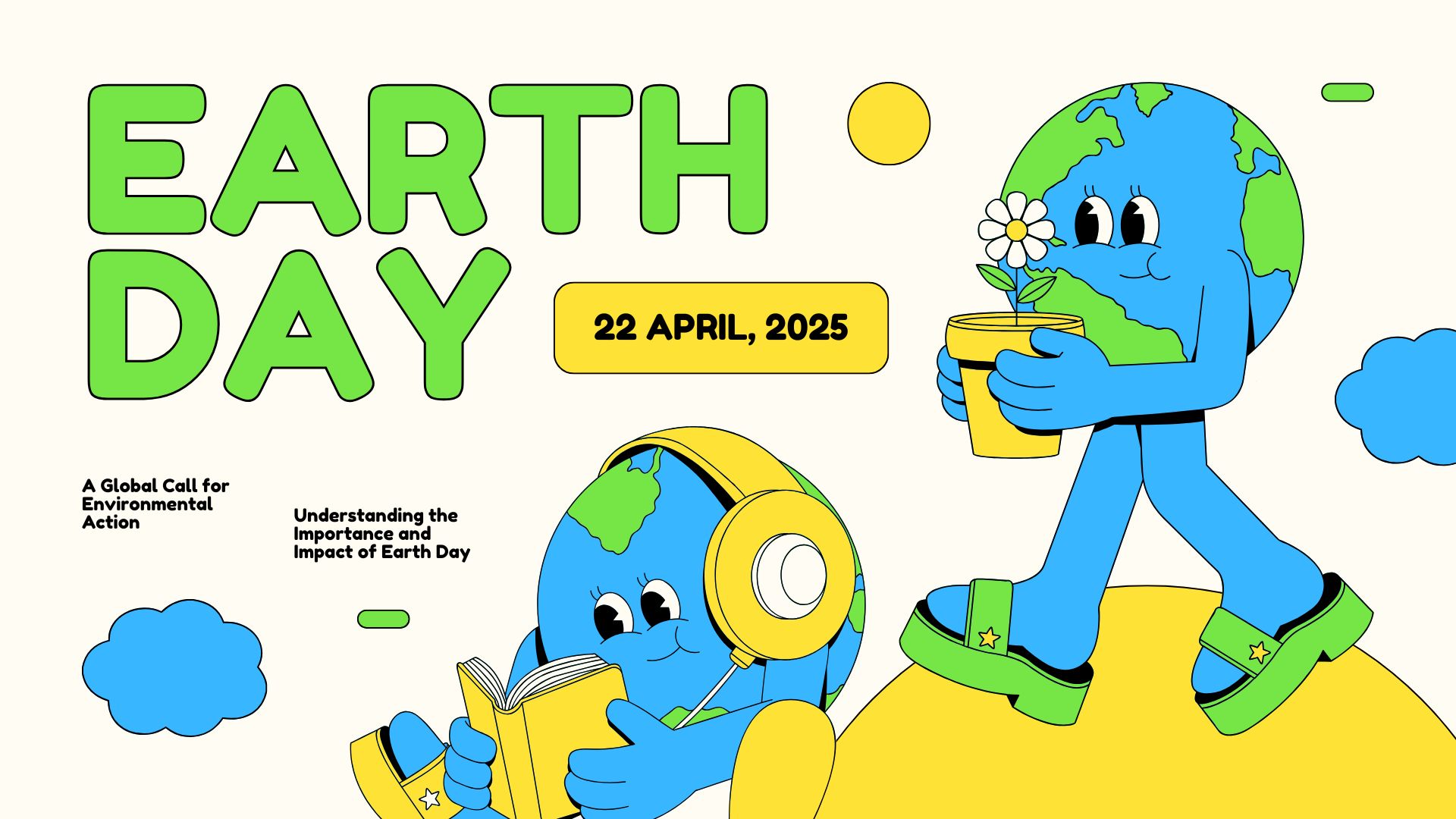
Every year Earth Day is celebrated on April 22. People and businesses all over the world perform acts of kindness towards the planet. As awareness of climate change and devestation brought forth by unprecedented natural disasters around the world, Earth Day quickly grew into Earth Month as the need to take on environmental actions became more prevelant.

Since its conception over 50 years ago, Earth Month is a time to show just how important our planet is to us. People from the smallest areas to larger organizations bring awarenss to the forefront, enabling and encouraging people to take action. We are all habitants in this big, beautiful world and it’s up to us to make sure she stays beautiful and clean for future generations.

This Earth Month, let’s take action in how to protect our planet. No small act goes unnoticed. No big act is too magnanimous.

HOW YOU CAN CELEBRATE EARTH MONTH:

  • Go Plant-Based during Earth Month. Plant-based foods are essentially food that comes from plants, such as legumes, soybeans, and any type of vegetables and fruit that can complete a meal. When you hear plant-based, you’re probably thinking of the term, “vegetarian” or “vegan”. But you don’t have to be either of those to enjoy a plant-based meal. If you’re new to the plant-based scene, try adding more beans, peas, lentils to your meals which replaces animal meat. Legumes are rich in protein and essential nutrients for a healthy body. Did you know, that eating just one plant-based meal for the week equals to planting 70,000 pine trees a yeaer?
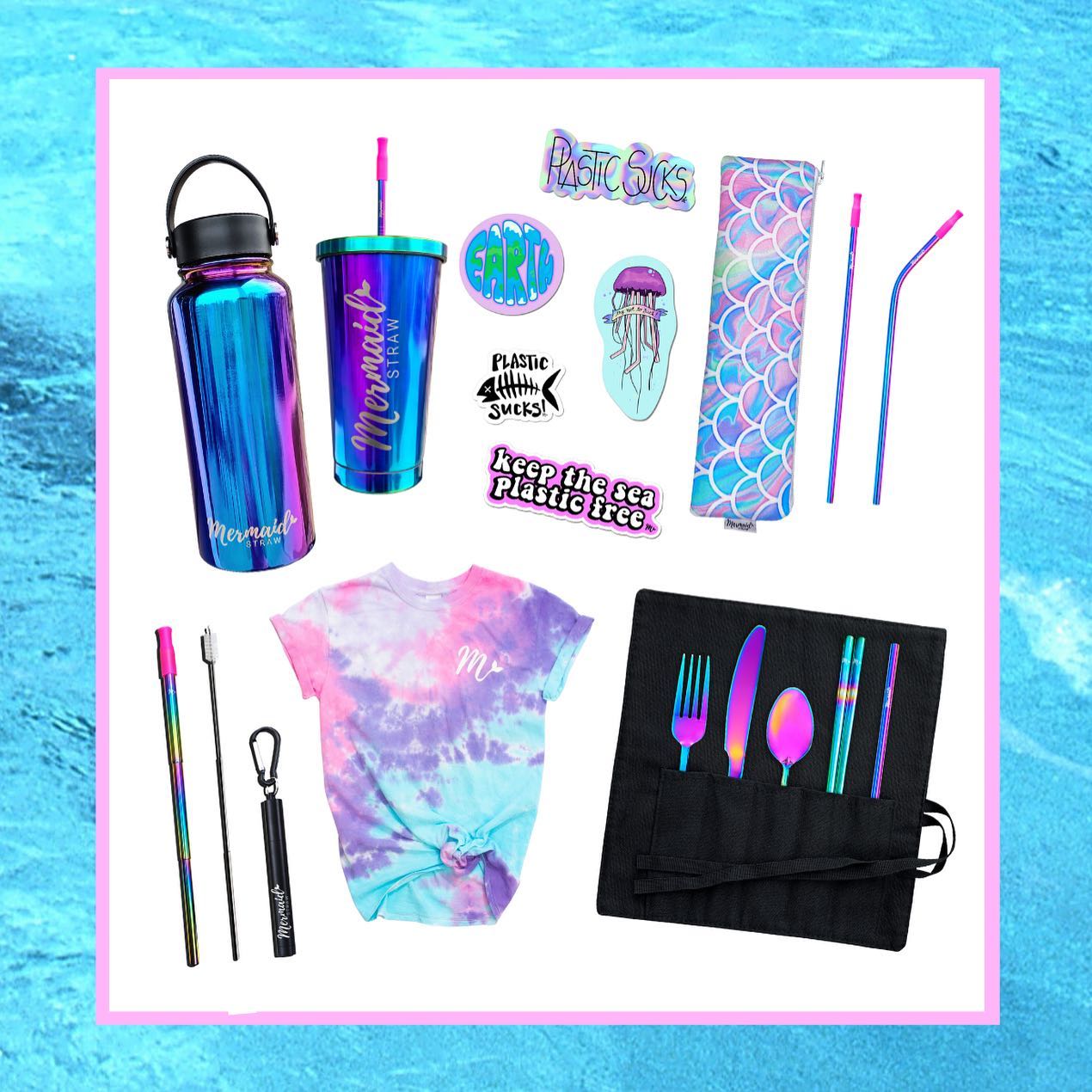
  • Switch to reusable products. We are already beyond trying to reduce single use plastics. Why? Because manufacturers will continue to produce single use plastics based on what the consumers buy. The trickle down effect from big businesses to consumers leaves us with millions in tons of plastics being used throughout the years. We can still do our part in reducing plastics that end up in our oceans, our landfills, and eventually in our food. Switch from single use plastics (plastic containers that should only be used once and thrown away), to materials that can be reused many times and can also be easily recycled and reproduced. Materials such as aluminum, glass, and products made from sustainable resources such as bamboo, palm leaves, and reclaimed wood are better choices.

  • Buy Less, Save More. The need to buy, buy, and buy stems from the desire of thinking we want more than what we already have. Consumerism is a huge factor in what companies produce and sell. If they know we want their products – regardless of their need – they will produce them. But as consumers, we also have the strongest voice in what we buy. We don’t want the cheap quality products that break after a few uses. We don’t want products that are not safe for our families. And we certainly don’t want to support companies that don’t align with our values. In this sense, buy less of what you don’t need and you’ll actually end up saving more money. Pretty easy to understand and appreciate that your dollars speak volumes in sending out a message to these corporations.

  • Support eco-friendly brands. While we are trying to spend less, we can also support companies that are responsible with what they do with their products. Choose companies that are part of the circular economy, where they find ways to reduce their carbon footprint in the world. While most small businesses try to reduce their carbon footprint, there are some larger brands that are going the way towards more sustainable practices.

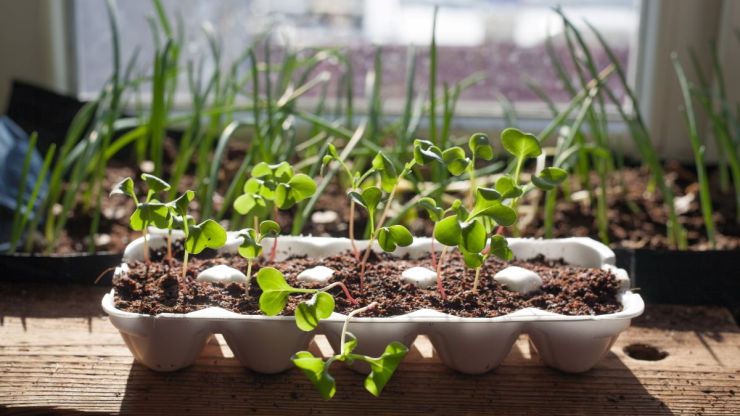
  • Grow a victory garden. Gardens whether big or small creates a natural environment for all living beings. But if you grow a garden for food, there are certain plants that require very little care, will come back every year, and can be a sustainable food in your meal planning. Try growing a garden that has seasonal and regional plants. Try out easy to grow fruits and vegetables that yield fast and large crops. Or try out plants that grow in successions which fills in gaps from a previous harvest. Beans, carrots, beets, garlic, and salad greens all takes advantage from the previous crop due to their warm and enriched soil.

  • Organize a cleanup day. The world is vast and filled with people who want a better environment. That’s why organizations around the world are taking action this Earth Day by hosting cleanup at beaches and parks, and even your local communities. Organizing a cleanup day is as simple as having a few friends and relatives pick up trash on the beach, or planting trees and native plants at a park (with permission of course). Some popular cleanup organizations include: United by Blue, Surfrider Foundation, and Earthday.org.

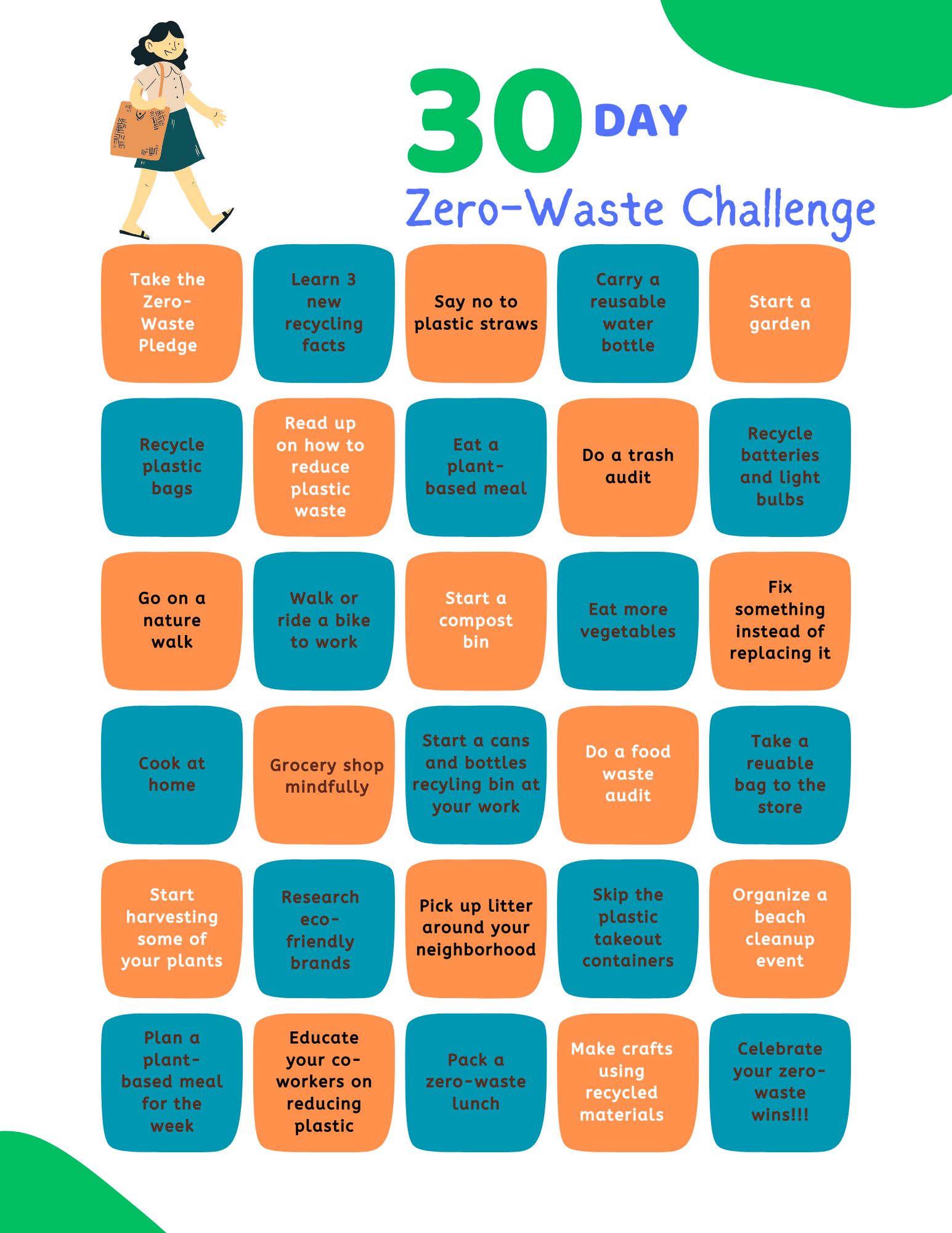
This Earth Month, let’s start reducing our carbon footprint and make a positive impact! Please see below my 30-day Zero Waste Challenge chart and see what you can accomplish!
 

Disclaimer: The product(s)were sent to the author for review by the manufacturer/PR. All reviews on “Happymomblogger” remain unbiased and unpaid and are the sole decision of the author. The opinions of these product(s) were not influenced in any way, shape, or form. As always, please read the ingredients carefully when trying new products.

Please read the labels and ingredients carefully and follow all manufacturer’s instructions (if any). The products selected for the giveaway were generously donated by the companies/PR to help readers learn more about their products. The winner’s choice in using/consuming these products are entirely up to the winner and will not hold the author and her family liable nor the companies/PR liable. These products are made with non-toxic ingredients but always be safe with what you use and consume.

Looking Ahead to 2025 – Sustainability, Choices, and Actions

The brand new year always brings a range of emotions for me. At times I’ll look back and see what I’ve accomplished, what I should have accomplished, and what ways I can improve myself for the future. A new year can bring many opportunities for change and improvement. We can reflect on our past and learn to grow for the better. Sometimes the challenges we faced in the past made us better and helped us see the “bigger picture”. Other times our challenges drained us and left us with even more doubts and questions.

Whatever paths you went through in 2024, don’t let it hinder you from making a brighter and better 2025. This year, I want to focus more on my sustainability efforts and I hope to help others crossover into this journey or help them grow. Our choices define us in a way that can lead to better decisions in the future, or hinder us from growing. Our actions can speak to others and ourselves, telling stories that can either help or prevent growth.

The year 2025, surprisingly also the year of the Snake in the Lunar calendar, signifies wisdom, growth, and transformation. Much like the snake that sheds its outer layer to transform into something newer, it also symbolizes growth and change. Change can bring positive and negative outcomes. But it’s up to us to decide how we want to make positive changes for the present and the future.

Sustainability is a big action, a giant movement. It is one of the most basic forms of survival. But in the sense of sustainability for the environment, we must bolster our efforts to protect our future generations. Sustainability for the environment is, the quality of causing little or no damage to the environment and therefore able to continue for a long time. Being sustainable can be as simple as necessary, or as complicated and intricate as you continue with planning and preserving the environment. Below I’ve listed some easy sustainability efforts, as well as stepping up to more complicated actions that you can take.

5 EASY WAYS TO CHOOSE SUSTAINABLE ACTIONS:

1- Conserve what you have. This philosophy helps with buying less, spending less, and using less. Conservation starts with knowing the needs of your family, yourself, your workplace, and anywhere you’d like to take on conservation. Start by analyzing where you are NOT conserving. For instance, are your utility bills too high? See where you can scale back usage and conserve in areas that are safe and sustainable for you and your family. Here’s a helpful article on conserving water in your home and/or business. You can apply some of these techniques with your other utilities as well: https://earth911.com/home-garden/conserving-water-at-home/

2 – Choose to Reduce, Reuse, and Recycle. If we want our planet to thrive for our future generations, we must choose to be kinder to our planet. Reduce the need for excess waste and materials that are not compostable or easily recyclable/reusable. Reuse what you have and swap with others when possible. By reusing an item indefinitely, we can reduce our need to buy more. But we careful of what you are reusing. Choose materials that are safe to reuse such as cotton, aluminum, glass, and wood. Recycle whenever you can and choose facilities that can recycle as many materials as possible. Most recycling facilities take back materials such as aluminum, glass, paper, wood, metal, and so forth. Be sure to check with your county’s recycling centers.

3 – Buy wisely. As consumers, we have the biggest influence in consumer product goods. When we choose to buy from brands that are environmentally responsible and promotes sustainable actions, we are telling businesses that we want them to be responsible and hold to their values and ethical actions. To take this further, we’ll discuss this in the advanced action steps.

4 – Learn the difference between Organic and Non-GMO. Organic products are products made from organic agriculture and companies must go through a rigorous certfication in order to be certified as organic. Organic food is grown without the use of synthetic chemicals, such as human-made pesticides and fertilizers, and does not contain genetically modified organisms, also known as GMOs. GMO, or genetically modified organism, is a plant, animal or microorganism that has been subjected to biotechnology. While GMO products are quite controversial, with people debating the necessity of this practice versus the dangerous side effects of it, it’s best to choose organic products due to the entire system of process that a certified organic product must go through. This means a cleaner and more sustainable environment for people, animals, and planet.

5 – Grow your own food. You’ve probably already read my posts that promote gardening and growing your own food. There are many benefits to growing your own fruits and vegetables, such as health reasons, sustainability, biodiversity, and just the pure joy of eating fruits and vegetables that were ripened on the branch rather than in the grocery store. In addition, you can grow what you love to eat or try out new crops throughout the years.

5 ADVANCED WAYS TO MAKE SUSTAINABLE ACTIONS:

1 – Choosing ethically made products. I mentioned earlier that consumers have great power in sustaining a business or company. We can choose to support a brand that aligns with our values or reject brands that are detrimental to the environment. But we don’t always get to pick and choose what brands to buy from, and that’s okay too as long as you educate yourself and become more aware of who you’re buying from. Most products are made for mass consumption. In the world of convenience mentality especially in the US, we buy products that save us time, but not necessarily saves our money and health. Do your own research on how companies make their products. This ranges from greenhouse emissions from their factories to how and where they source their raw materials.

2 – Teach your children and future generations. When you leave this world do you wish for a great future for your children and all future generations? Start educating your children at a young age to be advocates for the environment, their health, and their own well being. Education begins at home and it’s our job as parents to give our children an opportunity for a bright future. Teach your children the importance of eating healthy, of less waste, and understand fundamental roles as a caregiver of the planet.

3 – The impact of the meat industry. According to Earth911, The average American eats approximately 226 pounds of meat per year, and they are expected to eat even more – 233 pounds – by 2033. Food accounts for 10% to 30% of our household carbon footprint, and meat accounts for more than half of that. If you choose to eat meat in your meals, try to eat ones that produce less carbon footprint, which in turn can help minimize environmental damage. Beef produces the most product emissions which occurs in processing, transport, retail, cooking, and waste disposal. Pork and poultry produce much less carbon footprint, and seafood varies by type and how they are farmed/caught. To learm more about seafood impact on the environment, check out SeafoodWatch.org

4 – Upcycling. Upcycling is a method of repurposing what you already have instead of throwing them away. The latest trend of upcycling is upcycled food. You might be surprised at how much food is wasted each year in the US, let alone all over the world. Companies are upcycling their food products by using their not-so-perfect fruits and vegetables and producing them into dried fruit, dried soup packets, and so forth. Or they are commissioning farms to save their less perfect produce to be turned into upcycled food products. By upcycling what you already have, you can save money and resources and produce less waste in the environment.

5 – Make your business and company more sustainable. If you have the chance to make the world a better place, would you do it? Sure, you can start at home and with your own family and friends, but companies and businesses can produce A LOT of waste. A business should be responsible for their environmental impact. Afterall, they rely mostly on consumers and the needs of their customers. The energy used to extract, process, and ship raw materials for use in products, along with all the impacts along the supply chain account for the majority of greenhouse gas emissions globally. That also means that business can make the biggest difference simply by deciding to reduce extraction by switching to circular approaches to materials and to decarbonize industrial processes. For more info on how to change your company’s environmental impact, check out: Earth911

We only have one planet, but an abundance of opportunities to take positive actions. Educate yourself on the impact of your own carbon footprint, and take on ways to do more sustainable actions.


Disclaimer: The product(s)were sent to the author for review by the manufacturer/PR. All reviews on “Happymomblogger” remain unbiased and unpaid and are the sole decision of the author. The opinions of these product(s) were not influenced in any way, shape, or form. As always, please read the ingredients carefully when trying new products.

Please read the labels and ingredients carefully and follow all manufacturer’s instructions (if any). The products selected for the giveaway were generously donated by the companies/PR to help readers learn more about their products. The winner’s choice in using/consuming these products are entirely up to the winner and will not hold the author and her family liable nor the companies/PR liable. These products are made with non-toxic ingredients but always be safe with what you use and consume.

http://www.topmommyblogs.com/blogs/in.php?id=storm

10 Easy Swaps for Earth Month

When I was a child and living at home, I’d see my mom save glass jars from food she brought back from the market. I didn’t really understand the need to save those glass jars but soon I’d see those cleaned out jars hold other unique stuff. She made pickled vegetables and stored them in the jars or turned them into drinking glasses or flower vases. I realized that there was an abundant uses for glass jars and that there are numerous ways to reuse something you already have.

Reducing or eliminating the need to buy something out of convenience is the best way in reducing waste and helping our planet. If we all do just one small act to help the environment, we are already going on a better path to cleaner air and less waste in our landfills.

Below I’ve listed 10 easy ways to make small changes to help the planet. Whether you believe in climate change or not, we can all agree that we want to live on a cleaner planet.

10 EASY SWAPS FOR EARTH MONTH:

1- Swap out single-use plastic bottles for reusable water bottles. Buying a reusable water bottle saves you money on buying single-use plastic water bottles. Plus you are eliminating unnecessary plastics in landfills.

2. Swap out single-use plastic sandwich bags for silicone or paper sandwich bags. These handy reusable bags last for many years and are compostable.

3. Swap out grocery store bags with reusable bags. Store grocery bags are usually made from a material that is not recyclable. It’s best to invest in a better quality reusable grocery bag or tote.

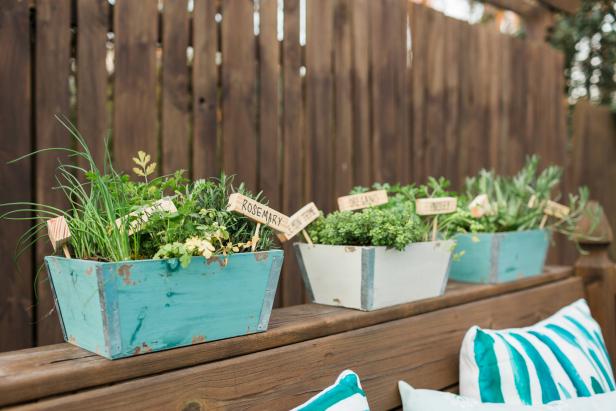
4. Swap out store-bought herbs and plant your own herb garden. Planting your own garden helps you have fresh herbs on hand and it reduces your carbon footprint by buying in stores.

5. Swap out polyester materials with eco-friendly materials. Materials made from organic cotton, repurposed cotton, and TENCEL are great alternatives, plus they wear well!

6. Swap out driving a short distance to get groceries to walking to the stores. If you’re within walking distance to a store, then try walking there to reduce carbon dioxide made by cars.

7. Swap out packaged produce to picking your own produce at a farmer’s market or a free-standing produce rack. The plastic packaging wrapped around produce is truly unnecessary.

8. Swap out plastic utensils and use reusable stainless steel or bamboo utensils. Just say “NO” when you’re offered plastic utensils. It’s easy to bring your own or use your own utensils.

9. Swap out new books with used books. Yes, that new book smell is quite delightful! But gently used books keep the circular recycling effective.

10. Swap out the need to recycle by reducing and reusing. Follow the 5 “R’s” and you’re on the path to reduce plastic use! Refuse, Reduce, Reuse, Repurpose, Recycle.

We can all do our part to make our planet healthier and cleaner. We all wish to breathe cleaner air and let nature reset itself so that our planet can stay healthy for many generations. Try doing at least one of these swaps and you’ll soon see a difference.

***Be sure to check out my Ambassador Codes tab for some great discounts! And stay tuned for next week’s posts for an AWESOME Eco-friendly prize!


Disclaimer: The product(s)were sent to the author for review by the manufacturer/PR. All reviews on “Happymomblogger” remain unbiased and unpaid and are the sole decision of the author. The opinions of these product(s) were not influenced in any way, shape, or form. As always, please read the ingredients carefully when trying new products.

Please read the labels and ingredients carefully and follow all manufacturer’s instructions (if any). The products selected for the giveaway were generously donated by the companies/PR to help readers learn more about their products. The winner’s choice in using/consuming these products are entirely up to the winner and will not hold the author and her family liable nor the companies/PR liable. These products are made with non-toxic ingredients but always be safe with what you use and consume.

http://www.topmommyblogs.com/blogs/in.php?id=storm

Celebrate Earth Month – The Future is Now.

There’s a young student at my work that told me she was going to save the planet in the future. I replied back to her, “why not start saving it now? YOU are the future of the planet”. She thought about what I said for a few moments, nodded sagely, and said she would do “just that”. I can’t begin to tell you how happy and proud I felt at that child’s declaration. Though she is young, she has the right idea and a bright future of hope, love, and kindness ahead of her.

If all it took were courageous promises from young children to make our world a better place, then we might yet have hope for the future. Children have no preconceptions of how something should be. They either do it or they don’t. And while an adult can make just as magnanimous a promise, we often hesitate based on past experiences or preconceived judgment from others. But everyone can have hope for a brighter and better planet. Everyone can do their part – whether small or gigantic – to help heal our planet and hopefully give our children, our children’s children, and their future children a promise for a healthier world.

This year, as we celebrate Earth Day on April 22, let’s make a promise to do one small act. One act of kindness for our planet, our environment, our world. Whether it’s eliminating single use plastics in your lives or saving paper by using less, any small step can eventually lead to bigger steps. Our actions are like waves in the ocean: one ripple can carry through the entire planet.

Earth Month, or Earth Day can be celebrated in many ways. Below are some popular ideas and tried and true suggestions, but feel free to come up with some of your own. Get your family and friends to perform these acts of kindness for our planet and the impact will be even greater and worthwhile. Get your children involved. Get other children involved. For they ARE our future.

10 Acts of Kindness for our planet on Earth Day:

  • Reduce your intake of meat. In a 2018 report, a typical home in America can produce 8.1 metric tons of carbon dioxide annually through their food and energy consumption. 83 percent of that CO2 is related to food production. If you give up meat (such as beef, pork, and lamb) for just one week, you can reduce your carbon footprint by between 2,541 and 783 pounds a year!  WHAT YOU CAN DO: Bring a salad to work for lunch or have salad for dinner at home. If you’re not the salad type, you can reduce meat consumption other ways such as skipping meat in the household one week per month or every other month. Try meat alternatives such as soy, Tempeh, and legumes. While every food still produces energy and carbon footprint, plant based food produces much less and has long term health benefits. BUT WHAT IF I CAN’T DO IT?: Being a vegetarian is not for everyone. Heck, it took me a few years off from being a vegetarian to realize how great it felt to not eat meat again. But that’s me though and I made changes to fit my own lifestyle throughout the years. But you CAN do it! Just start small – one day a week of no meat can already make a great impact. Or even replace one meal each day for a week. You can choose either breakfast, lunch, or dinner. Do you really need that slice of bacon in the morning? Or those sliced chicken in your salad at lunch? Or even a heavy piece of grilled steak for dinner? There are lots of innovative and DELICIOUS vegetarian style fare around you. Try it out!

  • Grow your own garden. Having your own garden – whether it’s a small patch in your backyard or acres worth – helps you control what you grow and what you eat. It also drastically reduces carbon footprint because you aren’t contributing to transportation of market produce and having to drive to the market for fresh vegetables. Imagine stepping outside your yard and picking out some freshly grown snap peas or plucking out a juicy carrot. WHAT YOU CAN DO: Decide where you want to grow your vegetable garden. Find a sunny spot but with access to shade during the day. Decide if you want a raised garden bed, in ground, or in planters. Many fruits and vegetables thrive exceedingly well in planters so don’t let small spaces deter you. Then decide what you want to grow. Check with your local nursery to see what’s in season. Decide how much you want to save and spend on your vegetable garden. Plan your growing season accordingly so that you can always have fresh vegetables. The easiest to grow and manage vegetables are: carrots, radish, tomatoes, snap peas, lettuce, herbs, cucumbers, squash, and corn. Be wary of certain types of bugs that like to enjoy your harvest and use only natural pesticides if necessary. BUT WHAT IF I CAN’T DO IT?: Gardening is truly the easiest and best way to stay healthy. It’s great exercise and you get to enjoy your bounty. Start off with a couple of large planters, good potting soil, and either seeds or seedlings. Pick easy to grow plants such as carrots and cucumbers or flowers such as sunflowers and lavender. Then, once you get the hang of it, continue with the growth of your garden and soon you will see blooms of delicious vegetables and beautiful flowers!

  • Reduce or eliminate single use plastic. Single use plastic means plastic that are used only once and then thrown away. These include plastic cups, straws, and plastic grocery bags. Remember that recycling is the LAST resort. As our planet starts to deteriorate faster than it can heal itself, we must all do our part in preserving our precious environment. WHAT YOU CAN DO: Stock up on reusable shopping bags made from recycled materials. Keep a few in the trunk of your car so you don’t forget when you’re out shopping. Eliminate the use of unnecessary straws. While you may think that one or two straws while you’re out drinking a beverage is no big deal, imagine you doing that ten times over in a week, a month, or even a year! And imagine 10 other people doing the same thing! You can fill up an entire swimming pool of plastic straws in a very short amount of time. Now imagine that in the ocean you swim in and admire. And imagine those plastic straws inside the fish you eat or around the necks of precious turtles and birds. Not really a pretty sight after all. You can also bring your own lunch in reusable containers. Try not to wrap your sandwiches in aluminum foil or plastic. And try using cloth napkins instead of paper. BUT WHAT IF I CAN’T DO IT?: Actually, you CAN! It can be as simple as putting even 1 reusable bag in your purse or front seat of your car. We all forget to bring reusable bags from time to time, but if you keep it in sight then you’re likely to remember to use them. And when you’re out getting a beverage, skip the straw. Simply drink straight from your cup. Unless there are difficulties preventing you from sipping directly from the cup, then you don’t really need a straw. And when you’re out eating, try not to leave any leftovers where you feel forced to take them home. Yes, food waste is a major problem in the US, but if you can just order the proper amount you want to eat then you won’t have any leftovers. If you do want to take food home, you can always bring your own containers or ask the restaurant to pack as much food in one container as possible.

  • Plant a tree. Trees are nature’s most powerful resources. Without trees, we would not have cleaner air and the necessary eco system for animals and insects. Trees breathe in CO2 and exhale oxygen, thus helping to clean the air around it. Human bodies produce CO2 which is toxic to our environment due to the food we consume, sickness, and bad hygiene. Planting trees or having trees in your home can have many benefits beside providing clean air. Trees can reduce ozone levels and erosion. And trees can reduce heating and air conditioner costs. WHAT YOU CAN DO: Make an initiative to plant more trees. Start a tree club or group and plant more trees where fires ruined the land or in areas where trees are desperately needed. It doesn’t have to cost much to plant trees. Pick trees such as Pine, Oak, and Cypress as they have less maintenance and can live for many, many years. Just be sure to plant ones that are suitable to the region. You can also grow trees in your own yard. Find a nice shady area and water accordingly. Once established, most trees do not require a lot of water so it also helps reduce water waste. BUT WHAT IF I CAN’T DO IT?: Planting trees might not be for everyone for whatever reasons, so start off small. Support a charity that plants trees in your honor. The Arbor Day Foundation is a great non-profit organization that plants trees for you (https://www.arborday.org/). Or if planting trees isn’t the thing for you, then you can always make monetary donations or volunteer at a tree planting organization or event.

  • Use separate bins to sort your Recycling. Most people in the US or even the world have a hard time figuring out how to recycle properly. You may think that all plastics can go in the plastic recycling bin or that not rinsing out food in containers actually hinders your recyclable containers from being recycled. All it takes are a few trash bins to sort out your waste properly. They don’t even have to be big bins or expensive ones. If you have room for them in the house, then a great visible place would be in the kitchen. Otherwise, the garage is a great place to keep them as well. WHAT YOU CAN DO: Typically, you’ll need at least 3 bins if you’re starting out: one for recyclable goods such as paper, certain plastics such as PETE #1 and #2, and glass food containers. One for beverage containers. Make sure the containers are made from recyclable materials such as aluminum, glass, and plastics made from PETE materials #1 and #2. Be sure to check with your local recycling facility to make sure they accept these materials. You can even earn money by properly recycling them. And the third bin would be for food waste. Food waste includes items that you can’t compost (a separate compost bin is another bin to add but only if you compost for your garden). Be sure to rinse out and dump out all the food scraps from your recyclable containers before putting them in the bin. BUT WHAT IF I CAN’T DO IT?: As I mentioned above, you can start off with just 3 separate bins. Once you get into the cycle of recycling, you can add more bins such as a compost bin to be used in your yard, an electronics bin such as batteries and any broken and old cords and cables (just be sure to properly recycle these instead of throwing them away in the trash), and an “unrecyclable” bin. What goes inside an unrecyclable bin? Things that are hazardous waste materials such as paint and aerosol cans, motor oil, and anything that contains toxic chemicals. Check your local recycling centers to find out how to properly dispose them.

  • Reduce paper waste. You can reduce paper waste by printing on both sides of the paper. This should be a fairly easy thing to do. We all print out documents at one time or another. But we don’t always keep those documents either. Thus, tons of paper gets wasted if we don’t practice printing on both sides. Better yet, try not to print at all. If you can send something electronically, do so. It’s unnecessary to print something unless you need a physical copy. WHAT YOU CAN DO: Here are some suggestions for reducing paper waste – If you’re in school, ask your teacher if you can send homework electronically; proofread carefully before you print to avoid mistakes and needlessly reprinting; and Upycle paper by creating crafts, using them as scratch paper, putting them in pet pens, and using them as wrapping paper for small gifts. BUT WHAT IF I CAN’T DO IT?: Everyone is guilty of wasting paper now and then. I work at a school and I see tons of paper being wasted. So the best advice is to remind yourself whenever you feel inclined to print something. Do you really need to print it? Or can you save the document on your computer or email the document to someone instead of mailing it?

  • Grow plants for pollinators. Natural pollinators such as bees and butterflies are so important for our eco system and our food source. Bees help pollinate food such as fruits and vegetables, wheat, and certain nuts and seeds, and of course an abundance of flowers. Pollinators also help other plants grow in rural areas or areas that desperately need plant and food crops. WHAT YOU CAN DO: The best plants for pollinators are native plants. Native plants are plants that grow in your region or area. You can search this up easily online by typing in: native plant zones. Native plants help pollinators remain in their area to support local agriculture. It also ensures that these pollinators remain healthy. Just be sure to plant as much organic as possible. Avoid using toxic pesticides for they can greatly damage the health of pollinators. Next, find plants that are specific to bees and butterflies. Best plants for pollinators are: lavender, milkweed, sunflowers, coneflower, oregano, salvia, yarrow, and many others. The best types of flowers are ones that are open with flat petals so they make easy landing places for pollinators. BUT WHAT IF I CAN’T DO IT?: It’s fairly easy to grow plants in your garden. If you live in an apartment or somewhere that prevents you from having a garden, then try container gardening. Even if it’s a few planters outside your front door or windowsill will help these important pollinators. Many plants thrive well in planters so don’t let space hinder you! And if you have a well, black thumb, then consider growing minimalist plants such as herbs and succulents. As long as these types of plants flower, then you’ll likely find bees and butterflies roaming around them.

  • Walk, ride bicycles, or carpool. We have become so dependent on our motor vehicles that we tend to forget they cause a majority of pollution on our planet. Reducing our carbon footprint is essential in helping our planet heal and replenish. Whenever we can walk or use non-engine types of vehicles such as bicycles and skateboards to get around, we are helping to reduce pollution and carbon dioxide as well as living a healthier lifestyle. WHAT YOU CAN DO: If you live close enough to your work, then consider riding your bicycle, walk, or even taking local transit. If you live too far, then try carpooling with a nearby co-worker and take turns driving. Try walking or bicycling to your nearest grocery store instead of driving. And try to buy all your groceries and personal necessities in one trip to avoid the unnecessary multiple trips to the store. BUT WHAT IF I CAN’T DO IT?: It really does take determination to reduce your carbon footprint. Not everyone is able to walk, ride, or carpool around town but if you can eliminate even one day of not using your motor vehicle, you are lessening the impact of your carbon footprint.

  • Use non-toxic cleaners. Toxic cleaners are the ones that have ingredients you can barely pronounce and a list that goes a mile long. These man-made cleaning agents do more harm than good to the environment, your health, and your property. Harsh cleansing agents actually break down compounds making them weak and fragile. Whenever possible, use natural cleaners or make some of your own. Great cleaning agents that are non-toxic and have proven results are vinegar, lemon, and salt. Essential oils from plants are also great for cleaning and detoxifying germy areas. WHAT YOU CAN DO: Invest in some really good and high quality natural cleaners. My favorites (that are also cruelty-free) are: Earth Friendly Products or ECOS, Seventh Generation, Mrs. Meyers, and Ecover, to name a few. If you want to make your own, try using baking soda, vinegar, and add in essential oils of lavender, mint, or thyme. Many essential oils have wondrous healing and antibacterial properties plus they add a nice, natural scent to your homemade cleaners. BUT WHAT IF I CAN’T DO IT?: Non-toxic cleaners ARE a thing! Some people may be skeptic to the efficacy of all natural cleaners but lab and home testing results have proven how effective they are. In fact, due to their natural ingredients that work with nature, they can prevent breaking down of certain materials that can otherwise get damaged by harsher cleaning agents. Non-toxic cleaners are also important if you have allergies and are sensitive to certain ingredients and scents. If you’re stuck on using the typical conventional cleaners, try using just one natural cleaner to start with and see how they work out for you.

  • Use natural beauty products. This one should be fairly easy to take on. I’ve been using natural beauty products for over 20 years and I noticed a huge difference in how my skin and body feels and looks. It might take a few times of using the product to see a noticeable difference and that’s because natural products use ingredients that work with your body and build up a natural balance rather than just temporarily hiding it or masking the problems. In time, your body will be in tune with the natural ingredients and the products you use so that your skin and your body will actually reject the harsher, non-natural products. Sounds crazy right? Natural beauty products are also gentler on the planet because they do not leave toxic residue in landfills and oceans. WHAT YOU CAN DO: Check out EWG’s (Environmental Working Group) (https://www.ewg.org/) database on natural beauty products. They help range over 70,000 beauty products on the level of toxicity. After you’ve had a chance to check out the database, head on over to your local beauty supply store or search online. Typically, the natural beauty product brands do not cause any adverse reactions but always check the ingredients list and try a sample if possible. My current favorite beauty brands are SIBU, Pangea Organics, Andalou Naturals, and Aveda (certain ingredients in their products might cause allergic reactions to some users). BUT WHAT IF I CAN’T DO IT?: There’s no such thing as using something that’s not natural. Even washing your hands in just water is natural. We all want to live a healthier lifestyle right? Then using non-toxic ingredients on our face, our body, and in our hair should be simple enough. Natural beauty products aren’t necessarily expensive and you can even make your own products. Start off on something small as switching to a more natural shampoo or using an essential oil blend as a moisturizer. Since I’ve been using natural beauty products for so many years, I get an immediate adverse reaction if I happen to use something that isn’t natural. It’s due to my skin going back to it’s original state when we were younger and didn’t need or want beauty products on our skin. You can be as scientific as you want, but it all comes down to letting your skin and your body readjust to a gentler and safer beauty routine.

This year, as we celebrate Earth Day, consider making a positive change for the environment. We all want to live with cleaner air and healthier food and we want to ensure that our children’s children and their future generations will have a better future. For some great resources on helping the environment, check out the following websites:

https://www.epa.gov/recycle/how-do-i-recycle-common-recyclables

https://www.ewg.org/consumer-guides

https://earth911.com

https://kidsgardening.org

https://www.sunset.com/garden/flowers-plants/plants-pollination#plants-pollination_15


Disclaimer: The product(s)were sent to the author for review by the manufacturer/PR. All reviews on “Happymomblogger” remain unbiased and unpaid and are the sole decision of the author. The opinions of these product(s) were not influenced in any way, shape, or form. As always, please read the ingredients carefully when trying new products.
Please read the labels and ingredients carefully and follow all manufacturer’s instructions (if any). The products selected for the giveaway were generously donated by the companies/PR to help readers learn more about their products. The winner’s choice in using/consuming these products are entirely up to the winner and will not hold the author and her family liable nor the companies/PR liable. These products are made with non-toxic ingredients but always be safe with what you use and consume.

http://www.topmommyblogs.com/blogs/in.php?id=storm