Take the 30-Day Zero-Waste Earth Month Challenge!

Every year Earth Day is celebrated on April 22. People and businesses all over the world perform acts of kindness towards the planet. As awareness of climate change and devestation brought forth by unprecedented natural disasters around the world, Earth Day quickly grew into Earth Month as the need to take on environmental actions became more prevelant.

Since its conception over 50 years ago, Earth Month is a time to show just how important our planet is to us. People from the smallest areas to larger organizations bring awarenss to the forefront, enabling and encouraging people to take action. We are all habitants in this big, beautiful world and it’s up to us to make sure she stays beautiful and clean for future generations.

This Earth Month, let’s take action in how to protect our planet. No small act goes unnoticed. No big act is too magnanimous.

HOW YOU CAN CELEBRATE EARTH MONTH:

  • Go Plant-Based during Earth Month. Plant-based foods are essentially food that comes from plants, such as legumes, soybeans, and any type of vegetables and fruit that can complete a meal. When you hear plant-based, you’re probably thinking of the term, “vegetarian” or “vegan”. But you don’t have to be either of those to enjoy a plant-based meal. If you’re new to the plant-based scene, try adding more beans, peas, lentils to your meals which replaces animal meat. Legumes are rich in protein and essential nutrients for a healthy body. Did you know, that eating just one plant-based meal for the week equals to planting 70,000 pine trees a yeaer?
  • Switch to reusable products. We are already beyond trying to reduce single use plastics. Why? Because manufacturers will continue to produce single use plastics based on what the consumers buy. The trickle down effect from big businesses to consumers leaves us with millions in tons of plastics being used throughout the years. We can still do our part in reducing plastics that end up in our oceans, our landfills, and eventually in our food. Switch from single use plastics (plastic containers that should only be used once and thrown away), to materials that can be reused many times and can also be easily recycled and reproduced. Materials such as aluminum, glass, and products made from sustainable resources such as bamboo, palm leaves, and reclaimed wood are better choices.

  • Buy Less, Save More. The need to buy, buy, and buy stems from the desire of thinking we want more than what we already have. Consumerism is a huge factor in what companies produce and sell. If they know we want their products – regardless of their need – they will produce them. But as consumers, we also have the strongest voice in what we buy. We don’t want the cheap quality products that break after a few uses. We don’t want products that are not safe for our families. And we certainly don’t want to support companies that don’t align with our values. In this sense, buy less of what you don’t need and you’ll actually end up saving more money. Pretty easy to understand and appreciate that your dollars speak volumes in sending out a message to these corporations.

  • Support eco-friendly brands. While we are trying to spend less, we can also support companies that are responsible with what they do with their products. Choose companies that are part of the circular economy, where they find ways to reduce their carbon footprint in the world. While most small businesses try to reduce their carbon footprint, there are some larger brands that are going the way towards more sustainable practices.

  • Grow a victory garden. Gardens whether big or small creates a natural environment for all living beings. But if you grow a garden for food, there are certain plants that require very little care, will come back every year, and can be a sustainable food in your meal planning. Try growing a garden that has seasonal and regional plants. Try out easy to grow fruits and vegetables that yield fast and large crops. Or try out plants that grow in successions which fills in gaps from a previous harvest. Beans, carrots, beets, garlic, and salad greens all takes advantage from the previous crop due to their warm and enriched soil.

  • Organize a cleanup day. The world is vast and filled with people who want a better environment. That’s why organizations around the world are taking action this Earth Day by hosting cleanup at beaches and parks, and even your local communities. Organizing a cleanup day is as simple as having a few friends and relatives pick up trash on the beach, or planting trees and native plants at a park (with permission of course). Some popular cleanup organizations include: United by Blue, Surfrider Foundation, and Earthday.org.

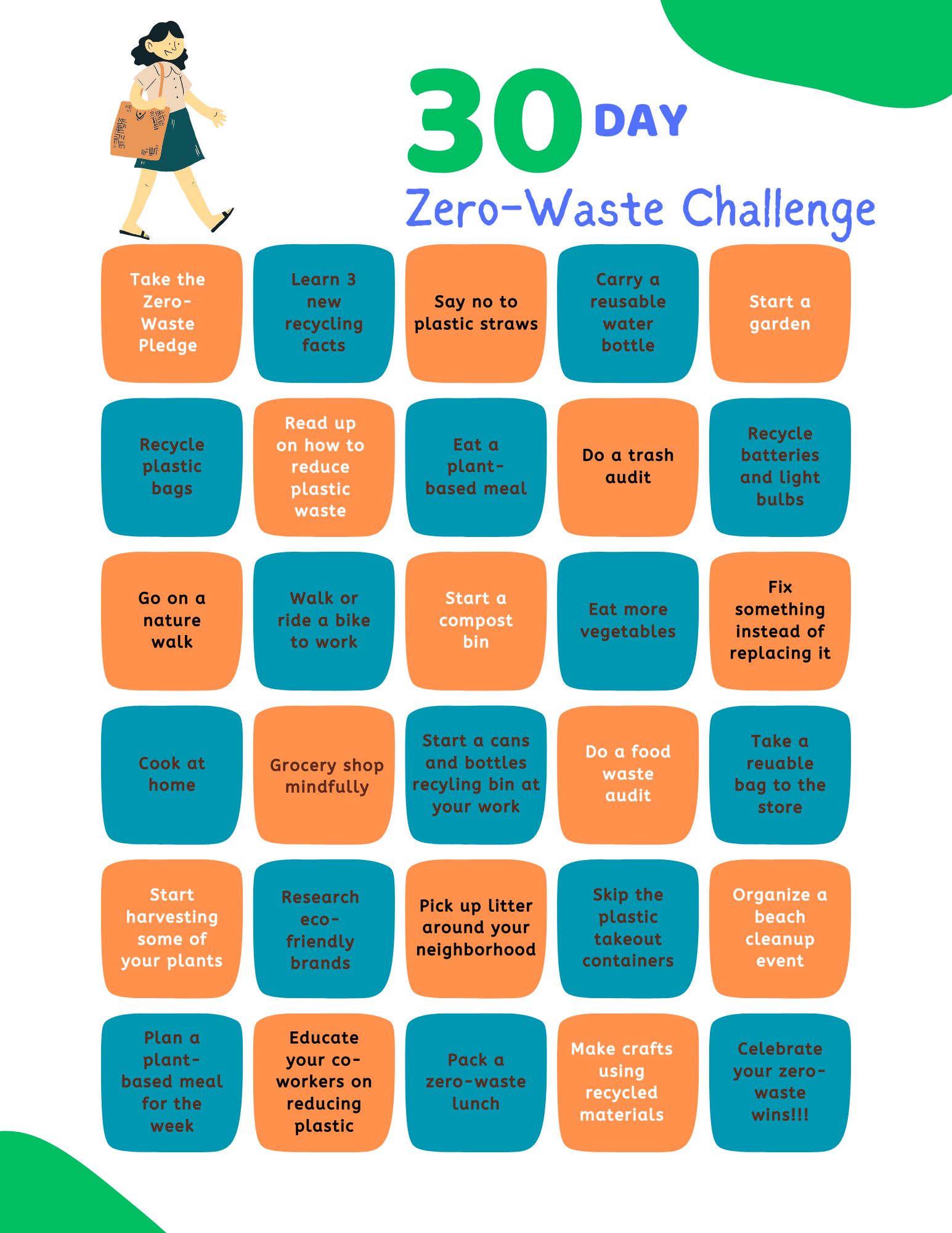
This Earth Month, let’s start reducing our carbon footprint and make a positive impact! Please see below my 30-day Zero Waste Challenge chart and see what you can accomplish!
 

Disclaimer: The product(s)were sent to the author for review by the manufacturer/PR. All reviews on “Happymomblogger” remain unbiased and unpaid and are the sole decision of the author. The opinions of these product(s) were not influenced in any way, shape, or form. As always, please read the ingredients carefully when trying new products.

Please read the labels and ingredients carefully and follow all manufacturer’s instructions (if any). The products selected for the giveaway were generously donated by the companies/PR to help readers learn more about their products. The winner’s choice in using/consuming these products are entirely up to the winner and will not hold the author and her family liable nor the companies/PR liable. These products are made with non-toxic ingredients but always be safe with what you use and consume.

EARTH MONTH 2023 – Ditch Perfection and Embrace Action

April 22, 2023 is officially Earth Day. However, during the month of April you’ve probably heard the phrase, “Earth Day is Every Day” throughout social media, news outlets, and so forth. Well, no truer words can be said than how we embrace Earth Day, or Earth Month. Each year we learn something new, something that enlightens us on how we can help this beautiful planet and all the living things on it. While there are still skepticism on whether climate change is real, the bold truth lies in what you see around you and the environment you live in. Why there are fluctuating climate changes year after year is an indication that Earth is shifting and changing from the actions of her inhabitants. But there is also good news! According to an United Nations report, Earth’s ozone layer is slowly healing itself, due to drastic climate actions taken all over the world. It is estimated to heal in about 43 years as long as we continue on the path of restoring our precious planet.

You might wonder…well, how can I save the planet? I’m here to tell you…no one person can do that job. And no one can do it perfectly either. All it really takes is one small action, which will eventually lead to many small actions. We don’t have to spend tons of money buying an eco-friendly product, or ditch our gas powered cars to buy electric. We don’t even have to spend any money to be more environmentally friendly. We just have to take ACTION!!!


For some, being environmentally aware is a journey. For others, it’s a fast action, momentary clarity. Where you might fall in between is probably the easiest and most accessible to everyone. We can start our journey with a couple of earth saving tasks, such as using reusable grocery bags instead of store plastic bags. Then, as we see the changes that could make, we can add a couple more tasks. Below, I’ve listed 10 ways one can begin their journey. We don’t have to do things perfectly. We just have to take action with one small step.

DITCH PERFECTION AND EMBRACE ACTION:

1 – Look around you as you begin your journey. Do you live in an area where litter is practically everywhere? Or are your city workers diligently and regularly cleaning up litter and debris? It doesn’t matter where you live – there will always be trash and litter left on the roads, in beaches, and business areas. Strive to pick up litter when you see it. You don’t have to tour the whole city to do so – you can start with your area and instantly see the changes.

2 – Start within your Community. The best place to start is where you live. Gather your friends, family, and co-workers and choose places where you can do cleanups. Make it a weekly activity and help your community be more aware of climate action.

3 – Start at home. Your home is probably where you have the most control…and the most challenges. Getting your whole family on board to be more environmentally aware can be a challenge if anyone has opposing views. But keep it simple – start by recycling your plastic and aluminums. Sort your food waste from your regular waste. Some cities throughout the US has strict rules on how to recycle and what to recycle, so check with your city’s municipal and/or trash services.

4 – Choose to buy responsibly. Where you put your money can determine how businesses will act. Don’t want to spend money on plastic waste? Support businesses that create products meant to help the environment. Not sure what to do with a closetful of clothes you’ll never wear again? Think about what to purchase the next time you want a new shirt or pants. 

5 – Choose organic. The word “organic” has been around for many years and there were some ambiguity in the beginning. People thought they were being “green-washed” into buying organic while not really knowing where the products were made or how they were made. Companies were jumping on the bandwagon with easy terms such as “made with organic ingredients” or “all-natural”, and inevitably caused confusion for real brands who were producing responsibly. Always check the labels and ingredients and better yet – do some research on the brands you buy from.

6 – Grow your own food. You don’t need a green thumb to grow food at home. There are many easy to grow plants that can be grown in pots or the smallest of gardens. Growing your own food reduces the carbon footprint of food shipped to stores. Your food is right in your own home, so you can choose what you want to grow based on what your family eats. The easiest plants to grow for food are: radishes, snap peas, cucumbers, lettuce, beans, and carrots. Start off with seeds to sow in your garden or planter, or buy organic and locally grown seedlings at garden centers. Growing your own food is also healthier and create an eco-system that helps pollinators and biodiversity.

7 – Zero waste/Less Waste. You don’t have to go completely off grid to be more eco-conscious. Being zero waste isn’t achievable for everyone, but reducing waste can be achievable for almost everyone. Consider what you’re buying and why you’re buying it. If you have children then that can be difficult to do, but not unattainable. The next time you buy something, seriously think about the absolute need for it. Can it be recycled or reused? Can you keep it for many, many years?

8 – Contact your lawmakers. Government who makes laws to help or hinder the environment needs to hear your voice. After all, we elect these officials and help pay their paychecks, why not make them work for us? Contact your legislators, congress, and your governors. Write letters, make phone calls, and attend public hearings when possible.

9 – Reduce Waste at school and workplace. Besides being more eco conscious at home, take on climate action at your school and workplace too. Check to see if your school and workplace recycles bottles and cans, recycle paper, reuse paper, and have a trash sorting program. 

10 – Teach your children. Kids are the future and their actions to help the planet can start as young as possible. Ideas to get your kids and whole family on board:

  • start a trash sorting system where you sort food for Compost, regular trash, and any recyclable bottles and cans. Then be sure to dump them correctly and/or take them to recycling centers.

  • pack school lunches in reusable containers and make a habit to do so each time.

  • teach your children that it isn’t necessary to have new toys all the time. Trade toys with their friends or family members, buy gently used toys, or buy from brands that use recycled materials.

When it comes down to reality – it truly isn’t difficult to help the planet. The 5 words you can remember when you’re stuck in a situation are:

  • REDUCE, REUSE, REFUSE, RECYCLE, REPURPOSE

Happy Earth Month and let us know how you’ve helped the planet!!!

The Top 10 Earth Day Events of 2023

Disclaimer: The product(s)were sent to the author for review by the manufacturer/PR. All reviews on “Happymomblogger” remain unbiased and unpaid and are the sole decision of the author. The opinions of these product(s) were not influenced in any way, shape, or form. As always, please read the ingredients carefully when trying new products.

Please read the labels and ingredients carefully and follow all manufacturer’s instructions (if any). The products selected for the giveaway were generously donated by the companies/PR to help readers learn more about their products. The winner’s choice in using/consuming these products are entirely up to the winner and will not hold the author and her family liable nor the companies/PR liable. These products are made with non-toxic ingredients but always be safe with what you use and consume.

http://www.topmommyblogs.com/blogs/in.php?id=storm


Earth Month – It’s Easy Being Green

April 22, 2022 marks the 52 year anniversary of Earth Day. What started as a grassroot agenda to educate the world on the importance of preserving our planet, it is now a widespread event celebrated and honored throughout the world. Schools, businesses, and people all over the world come together to honor Mother Nature by leading, guiding, and performing kind acts toward the planet.

Each year I discover something new about our environment and the detrimental effects caused by humans. It oddly feels like we’re taking one step forward, two steps back. Just as we’re on the move to educate each other on the importance of cleaning up our planet, there is always some sort of setback. When will we open our eyes? When will we all realize that this planet is the only one we currently live on?

My favorite motto for people who want to do better for the environment and a more realistic goal is simply, “make just one small change. One positive change can lead to many more positive changes.” You don’t have to be a world leader on environmental issues. You don’t have to clean up the beaches and oceans by yourself. But you can take a small step to recognize that our planet needs help. You might ask yourself – what can one person do when this world is so massive? If we all believe we can’t do anything, then nothing will ever get accomplished.

My best advice is to start at home. Get your children involved. Most young children love to help clean up and learn about how to conserve energy and not be wasteful. But we must set good examples for our children so that they can grow up to inspire and lead others.

Here I’ve listed 5 super simple steps you can do RIGHT NOW. These are all basic steps that work for anyone of any age and gender. Try all of them or even just a couple. Remember – it takes just one small positive change.

5 EASY ECO-FRIENDLY CHANGES:

1- Start by assessing what you have in your house. Is your home filled mostly with single-use plastics such as takeout cartons, snack bags, and plastic water bottles? You can make small positive changes by not using single-use plastic water bottles or reduce the usage and refill a reusable water container for home, work, and school. Reducing your snacks such as potato chips and cookies is not only beneficial to the landfill, but to your health as well. As for take-outs, we all enjoy them now and then but it can be costly to our finances and health.

2- Start growing a small garden. You don’t need a huge yard to grow an edible garden. Many vegetables grow well in planters and pots. All of these can be grown from seeds and harvested within 6 weeks. Easy to grow plants that produce the fastest harvests are: Arugula, radish, turnips, micro greens, kale, lettuce, and cabbage. Try experimenting these in different stages or grow them all at once so you have a continuous harvest.

3- Start by eating less meat, particularly red meat. The road to being a vegetarian or vegan can be difficult and it’s not for everyone. But reducing even half a pound of red meat a day is equivalent to reducing 7.40 pounds of carbon dioxide produced. This is what people refer to as Greenhouse Gas which is the toxic emissions that damages our planet’s atmosphere. You might think – well, why don’t I just drive less? Well, that leads to my next step, and surely eating less meat is also good for animals right?

4- Start by driving less and using natural transportation. What – there’s natural transportation? What I mean is using your legs and feet. They’re as natural as can be. Take days where you are able to walk to school, work, or the local grocery store. Using less gas greatly reduces your Carbon Footprint.

5- Start a cleanup team. In the vast world we live in, you’ll surely see trash littered everywhere. Even if you live in the best community, trash is inevitable. They can be carried by the wind and thrown on the ground which can eventually lead into the oceans and devastate our overflowing landfills. Get together with your friends and family or join a local cleanup group. Check out Keep America Beautiful to find a local cleanup: https://kab.org/

***Check out my Earth Month Survey below!

Disclaimer: The product(s)were sent to the author for review by the manufacturer/PR. All reviews on “Happymomblogger” remain unbiased and unpaid and are the sole decision of the author. The opinions of these product(s) were not influenced in any way, shape, or form. As always, please read the ingredients carefully when trying new products.

Please read the labels and ingredients carefully and follow all manufacturer’s instructions (if any). The products selected for the giveaway were generously donated by the companies/PR to help readers learn more about their products. The winner’s choice in using/consuming these products are entirely up to the winner and will not hold the author and her family liable nor the companies/PR liable. These products are made with non-toxic ingredients but always be safe with what you use and consume.

http://www.topmommyblogs.com/blogs/in.php?id=storm

Earth Day – April 22, 2020

Not once during all my years of promoting Earth Day, did I have to start with…”during this unprecedented time”. But times are indeed troubling and confusing and most of us are left wondering if there will ever be a “light at the end of the tunnel.” Thinking positively is all we can do because if we don’t, then the struggles are even harder.

With the annual Earth Day coming up, how do we continue to help the environment if we’re ordered to “stay at home”? The answer is, that we must find safe and achievable steps we can still take to help Mother Earth. As countries are ordered to stay at home to help slow the spread of the virus, it seems that oceans and lakes are clearing up, public streets are devoid of trash, and people are banding together to clean up their communities. It’s as if nature itself has hit the “reset” button and trying to clean up as much as possible. 

But sadly, there are news of people leaving their discarded gloves and masks everywhere. People are throwing them onto the streets or leaving them in store shelves or shopping carts instead of disposing them properly. These kind of actions are unacceptable and leaving very dangerous traces of germs everywhere. We can’t ignore the fact that now more than ever, we need to take drastic steps to be clean and safe.

This Earth Day, there are some very easy and convenient steps you can take to help our planet. I truly hope you can share some of your advice and wisdom on social media as I will be doing so on April 22.

EARTH DAY ACTIONS:

Continue to use things digitally but responsibly. While we practically live in the digital world, we still have to be mindful of the electricity that we use. While many utility companies are offsetting their electricity usages, we still need to remember to turn off electrical equipment when not in use, and rest our minds throughout the day. However, buying media digitally does save trees, electricity, ink, and so forth.

Donate. Donation companies might be closed temporarily during the “Safer at Home”mandate, but you can still save items for when they reopen. Better yet, donate them to neighbors or friends who might need them.

Participate in virtual Earth Day events. Some great events include:

– Plant a garden. Planting a garden, whether it’s for food or joy, is always a great thing to do. If you plant for food, try out easier to grow plants such as tomatoes, cucumbers, lettuce, beans, and herbs. All of these type of plants have a fast growing cycle and will yield an abundance of food for you and your family. Each year I try to grow cucumbers and beans and since I live in California, it’s easy to grow tomatoes and herbs year-round. 

– Upcycle. This is perhaps one of my favorite things to do for the environment. We are at a point where recycling is no longer the first option as it might have been decades ago. Instead, let’s try upcycling. Upcycling is simply taking something that you already have and finding a new purpose or use for it. It could be anything as simple as an old t-shirt that you can turn into a reusable shopping bag or cut up into large squares to use as cleaning rags. I bet if you look around your house you’ll find lots of things you can upcycle and give them a new “life”. Some fun and easy ways of upcycling includes:

  • clothing – take any old and outgrown clothes and turn them into reusable bags, cleaning rags, aprons, add-ons to existing clothing, wrapping paper, and etc. Check out some ideas here.

  • glass jars – take any clean and sanitized glass jars (think jams and pickle jars) and use them to plant succulents and herbs. Glass jars make excellent reusable products due to the ability to stay sanitized and varying sizes and colors. Check out some ideas here.

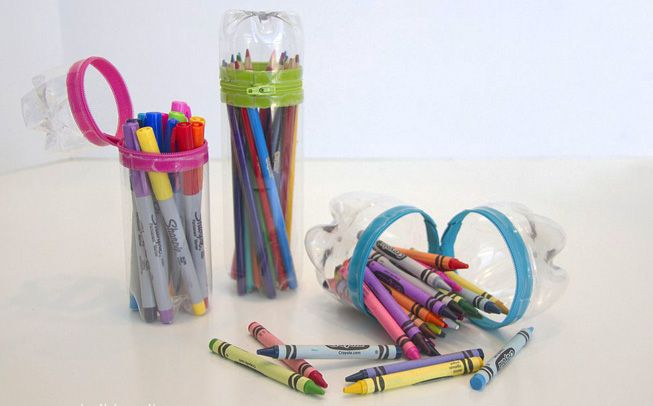
  • plastic bottles – this is possibly the easiest and best ways of reducing your plastic usage. Since recycling should be the last resort, you can extend the life of your plastic bottles for many years by upcycling them into soap dispensers, garden planters, and even pencil holders. Check out some ideas here

– Display Earth. Make Earth-shaped cutouts, color them in, and tape them on your windows. Encourage your friends and relatives to do the same so that people will know you “stand with Mother Earth”. See below for a printout.

– Make Seed Bombs. Seed bombs are incredibly fun to do. You simply take some scratch paper or colored scrap paper and blend them with wildflower seeds. Then roll them into balls or small shapes and let dry. When you’re out walking the neighborhood, throw some into the fields and when it rains again, the seeds will disperse and grow. Just be sure to buy wildflowers that are specific to your region and non-GMO so chemicals don’t interfere with the natural plants around it. Check out the instructions here.

– Clean up your community. Depending on where you live and how safe your community is right now, try going around your neighborhood or around schools and clean up the sidewalks and parks. Once the “shelter in place” has been lifted, join an environmental cleanup crew such as www.unitedbyblue.com.

*** There are lots of creative and fun ways of supporting our planet this year, even when we’re supposed to stay at home. You can probably think up some really great ideas on your own! Be sure to share your ideas and thoughts with others so everyone can support our planet.


Disclaimer: The product(s)were sent to the author for review by the manufacturer/PR. All reviews on “Happymomblogger” remain unbiased and unpaid and are the sole decision of the author. The opinions of these product(s) were not influenced in any way, shape, or form. As always, please read the ingredients carefully when trying new products.
Please read the labels and ingredients carefully and follow all manufacturer’s instructions (if any). The products selected for the giveaway were generously donated by the companies/PR to help readers learn more about their products. The winner’s choice in using/consuming these products are entirely up to the winner and will not hold the author and her family liable nor the companies/PR liable. These products are made with non-toxic ingredients but always be safe with what you use and consume.

http://www.topmommyblogs.com/blogs/in.php?id=storm


Celebrate Earth Month – The Future is Now.

There’s a young student at my work that told me she was going to save the planet in the future. I replied back to her, “why not start saving it now? YOU are the future of the planet”. She thought about what I said for a few moments, nodded sagely, and said she would do “just that”. I can’t begin to tell you how happy and proud I felt at that child’s declaration. Though she is young, she has the right idea and a bright future of hope, love, and kindness ahead of her.

If all it took were courageous promises from young children to make our world a better place, then we might yet have hope for the future. Children have no preconceptions of how something should be. They either do it or they don’t. And while an adult can make just as magnanimous a promise, we often hesitate based on past experiences or preconceived judgment from others. But everyone can have hope for a brighter and better planet. Everyone can do their part – whether small or gigantic – to help heal our planet and hopefully give our children, our children’s children, and their future children a promise for a healthier world.

This year, as we celebrate Earth Day on April 22, let’s make a promise to do one small act. One act of kindness for our planet, our environment, our world. Whether it’s eliminating single use plastics in your lives or saving paper by using less, any small step can eventually lead to bigger steps. Our actions are like waves in the ocean: one ripple can carry through the entire planet.

Earth Month, or Earth Day can be celebrated in many ways. Below are some popular ideas and tried and true suggestions, but feel free to come up with some of your own. Get your family and friends to perform these acts of kindness for our planet and the impact will be even greater and worthwhile. Get your children involved. Get other children involved. For they ARE our future.

10 Acts of Kindness for our planet on Earth Day:

  • Reduce your intake of meat. In a 2018 report, a typical home in America can produce 8.1 metric tons of carbon dioxide annually through their food and energy consumption. 83 percent of that CO2 is related to food production. If you give up meat (such as beef, pork, and lamb) for just one week, you can reduce your carbon footprint by between 2,541 and 783 pounds a year!  WHAT YOU CAN DO: Bring a salad to work for lunch or have salad for dinner at home. If you’re not the salad type, you can reduce meat consumption other ways such as skipping meat in the household one week per month or every other month. Try meat alternatives such as soy, Tempeh, and legumes. While every food still produces energy and carbon footprint, plant based food produces much less and has long term health benefits. BUT WHAT IF I CAN’T DO IT?: Being a vegetarian is not for everyone. Heck, it took me a few years off from being a vegetarian to realize how great it felt to not eat meat again. But that’s me though and I made changes to fit my own lifestyle throughout the years. But you CAN do it! Just start small – one day a week of no meat can already make a great impact. Or even replace one meal each day for a week. You can choose either breakfast, lunch, or dinner. Do you really need that slice of bacon in the morning? Or those sliced chicken in your salad at lunch? Or even a heavy piece of grilled steak for dinner? There are lots of innovative and DELICIOUS vegetarian style fare around you. Try it out!

  • Grow your own garden. Having your own garden – whether it’s a small patch in your backyard or acres worth – helps you control what you grow and what you eat. It also drastically reduces carbon footprint because you aren’t contributing to transportation of market produce and having to drive to the market for fresh vegetables. Imagine stepping outside your yard and picking out some freshly grown snap peas or plucking out a juicy carrot. WHAT YOU CAN DO: Decide where you want to grow your vegetable garden. Find a sunny spot but with access to shade during the day. Decide if you want a raised garden bed, in ground, or in planters. Many fruits and vegetables thrive exceedingly well in planters so don’t let small spaces deter you. Then decide what you want to grow. Check with your local nursery to see what’s in season. Decide how much you want to save and spend on your vegetable garden. Plan your growing season accordingly so that you can always have fresh vegetables. The easiest to grow and manage vegetables are: carrots, radish, tomatoes, snap peas, lettuce, herbs, cucumbers, squash, and corn. Be wary of certain types of bugs that like to enjoy your harvest and use only natural pesticides if necessary. BUT WHAT IF I CAN’T DO IT?: Gardening is truly the easiest and best way to stay healthy. It’s great exercise and you get to enjoy your bounty. Start off with a couple of large planters, good potting soil, and either seeds or seedlings. Pick easy to grow plants such as carrots and cucumbers or flowers such as sunflowers and lavender. Then, once you get the hang of it, continue with the growth of your garden and soon you will see blooms of delicious vegetables and beautiful flowers!

  • Reduce or eliminate single use plastic. Single use plastic means plastic that are used only once and then thrown away. These include plastic cups, straws, and plastic grocery bags. Remember that recycling is the LAST resort. As our planet starts to deteriorate faster than it can heal itself, we must all do our part in preserving our precious environment. WHAT YOU CAN DO: Stock up on reusable shopping bags made from recycled materials. Keep a few in the trunk of your car so you don’t forget when you’re out shopping. Eliminate the use of unnecessary straws. While you may think that one or two straws while you’re out drinking a beverage is no big deal, imagine you doing that ten times over in a week, a month, or even a year! And imagine 10 other people doing the same thing! You can fill up an entire swimming pool of plastic straws in a very short amount of time. Now imagine that in the ocean you swim in and admire. And imagine those plastic straws inside the fish you eat or around the necks of precious turtles and birds. Not really a pretty sight after all. You can also bring your own lunch in reusable containers. Try not to wrap your sandwiches in aluminum foil or plastic. And try using cloth napkins instead of paper. BUT WHAT IF I CAN’T DO IT?: Actually, you CAN! It can be as simple as putting even 1 reusable bag in your purse or front seat of your car. We all forget to bring reusable bags from time to time, but if you keep it in sight then you’re likely to remember to use them. And when you’re out getting a beverage, skip the straw. Simply drink straight from your cup. Unless there are difficulties preventing you from sipping directly from the cup, then you don’t really need a straw. And when you’re out eating, try not to leave any leftovers where you feel forced to take them home. Yes, food waste is a major problem in the US, but if you can just order the proper amount you want to eat then you won’t have any leftovers. If you do want to take food home, you can always bring your own containers or ask the restaurant to pack as much food in one container as possible.

  • Plant a tree. Trees are nature’s most powerful resources. Without trees, we would not have cleaner air and the necessary eco system for animals and insects. Trees breathe in CO2 and exhale oxygen, thus helping to clean the air around it. Human bodies produce CO2 which is toxic to our environment due to the food we consume, sickness, and bad hygiene. Planting trees or having trees in your home can have many benefits beside providing clean air. Trees can reduce ozone levels and erosion. And trees can reduce heating and air conditioner costs. WHAT YOU CAN DO: Make an initiative to plant more trees. Start a tree club or group and plant more trees where fires ruined the land or in areas where trees are desperately needed. It doesn’t have to cost much to plant trees. Pick trees such as Pine, Oak, and Cypress as they have less maintenance and can live for many, many years. Just be sure to plant ones that are suitable to the region. You can also grow trees in your own yard. Find a nice shady area and water accordingly. Once established, most trees do not require a lot of water so it also helps reduce water waste. BUT WHAT IF I CAN’T DO IT?: Planting trees might not be for everyone for whatever reasons, so start off small. Support a charity that plants trees in your honor. The Arbor Day Foundation is a great non-profit organization that plants trees for you (https://www.arborday.org/). Or if planting trees isn’t the thing for you, then you can always make monetary donations or volunteer at a tree planting organization or event.

  • Use separate bins to sort your Recycling. Most people in the US or even the world have a hard time figuring out how to recycle properly. You may think that all plastics can go in the plastic recycling bin or that not rinsing out food in containers actually hinders your recyclable containers from being recycled. All it takes are a few trash bins to sort out your waste properly. They don’t even have to be big bins or expensive ones. If you have room for them in the house, then a great visible place would be in the kitchen. Otherwise, the garage is a great place to keep them as well. WHAT YOU CAN DO: Typically, you’ll need at least 3 bins if you’re starting out: one for recyclable goods such as paper, certain plastics such as PETE #1 and #2, and glass food containers. One for beverage containers. Make sure the containers are made from recyclable materials such as aluminum, glass, and plastics made from PETE materials #1 and #2. Be sure to check with your local recycling facility to make sure they accept these materials. You can even earn money by properly recycling them. And the third bin would be for food waste. Food waste includes items that you can’t compost (a separate compost bin is another bin to add but only if you compost for your garden). Be sure to rinse out and dump out all the food scraps from your recyclable containers before putting them in the bin. BUT WHAT IF I CAN’T DO IT?: As I mentioned above, you can start off with just 3 separate bins. Once you get into the cycle of recycling, you can add more bins such as a compost bin to be used in your yard, an electronics bin such as batteries and any broken and old cords and cables (just be sure to properly recycle these instead of throwing them away in the trash), and an “unrecyclable” bin. What goes inside an unrecyclable bin? Things that are hazardous waste materials such as paint and aerosol cans, motor oil, and anything that contains toxic chemicals. Check your local recycling centers to find out how to properly dispose them.

  • Reduce paper waste. You can reduce paper waste by printing on both sides of the paper. This should be a fairly easy thing to do. We all print out documents at one time or another. But we don’t always keep those documents either. Thus, tons of paper gets wasted if we don’t practice printing on both sides. Better yet, try not to print at all. If you can send something electronically, do so. It’s unnecessary to print something unless you need a physical copy. WHAT YOU CAN DO: Here are some suggestions for reducing paper waste – If you’re in school, ask your teacher if you can send homework electronically; proofread carefully before you print to avoid mistakes and needlessly reprinting; and Upycle paper by creating crafts, using them as scratch paper, putting them in pet pens, and using them as wrapping paper for small gifts. BUT WHAT IF I CAN’T DO IT?: Everyone is guilty of wasting paper now and then. I work at a school and I see tons of paper being wasted. So the best advice is to remind yourself whenever you feel inclined to print something. Do you really need to print it? Or can you save the document on your computer or email the document to someone instead of mailing it?

  • Grow plants for pollinators. Natural pollinators such as bees and butterflies are so important for our eco system and our food source. Bees help pollinate food such as fruits and vegetables, wheat, and certain nuts and seeds, and of course an abundance of flowers. Pollinators also help other plants grow in rural areas or areas that desperately need plant and food crops. WHAT YOU CAN DO: The best plants for pollinators are native plants. Native plants are plants that grow in your region or area. You can search this up easily online by typing in: native plant zones. Native plants help pollinators remain in their area to support local agriculture. It also ensures that these pollinators remain healthy. Just be sure to plant as much organic as possible. Avoid using toxic pesticides for they can greatly damage the health of pollinators. Next, find plants that are specific to bees and butterflies. Best plants for pollinators are: lavender, milkweed, sunflowers, coneflower, oregano, salvia, yarrow, and many others. The best types of flowers are ones that are open with flat petals so they make easy landing places for pollinators. BUT WHAT IF I CAN’T DO IT?: It’s fairly easy to grow plants in your garden. If you live in an apartment or somewhere that prevents you from having a garden, then try container gardening. Even if it’s a few planters outside your front door or windowsill will help these important pollinators. Many plants thrive well in planters so don’t let space hinder you! And if you have a well, black thumb, then consider growing minimalist plants such as herbs and succulents. As long as these types of plants flower, then you’ll likely find bees and butterflies roaming around them.

  • Walk, ride bicycles, or carpool. We have become so dependent on our motor vehicles that we tend to forget they cause a majority of pollution on our planet. Reducing our carbon footprint is essential in helping our planet heal and replenish. Whenever we can walk or use non-engine types of vehicles such as bicycles and skateboards to get around, we are helping to reduce pollution and carbon dioxide as well as living a healthier lifestyle. WHAT YOU CAN DO: If you live close enough to your work, then consider riding your bicycle, walk, or even taking local transit. If you live too far, then try carpooling with a nearby co-worker and take turns driving. Try walking or bicycling to your nearest grocery store instead of driving. And try to buy all your groceries and personal necessities in one trip to avoid the unnecessary multiple trips to the store. BUT WHAT IF I CAN’T DO IT?: It really does take determination to reduce your carbon footprint. Not everyone is able to walk, ride, or carpool around town but if you can eliminate even one day of not using your motor vehicle, you are lessening the impact of your carbon footprint.

  • Use non-toxic cleaners. Toxic cleaners are the ones that have ingredients you can barely pronounce and a list that goes a mile long. These man-made cleaning agents do more harm than good to the environment, your health, and your property. Harsh cleansing agents actually break down compounds making them weak and fragile. Whenever possible, use natural cleaners or make some of your own. Great cleaning agents that are non-toxic and have proven results are vinegar, lemon, and salt. Essential oils from plants are also great for cleaning and detoxifying germy areas. WHAT YOU CAN DO: Invest in some really good and high quality natural cleaners. My favorites (that are also cruelty-free) are: Earth Friendly Products or ECOS, Seventh Generation, Mrs. Meyers, and Ecover, to name a few. If you want to make your own, try using baking soda, vinegar, and add in essential oils of lavender, mint, or thyme. Many essential oils have wondrous healing and antibacterial properties plus they add a nice, natural scent to your homemade cleaners. BUT WHAT IF I CAN’T DO IT?: Non-toxic cleaners ARE a thing! Some people may be skeptic to the efficacy of all natural cleaners but lab and home testing results have proven how effective they are. In fact, due to their natural ingredients that work with nature, they can prevent breaking down of certain materials that can otherwise get damaged by harsher cleaning agents. Non-toxic cleaners are also important if you have allergies and are sensitive to certain ingredients and scents. If you’re stuck on using the typical conventional cleaners, try using just one natural cleaner to start with and see how they work out for you.

  • Use natural beauty products. This one should be fairly easy to take on. I’ve been using natural beauty products for over 20 years and I noticed a huge difference in how my skin and body feels and looks. It might take a few times of using the product to see a noticeable difference and that’s because natural products use ingredients that work with your body and build up a natural balance rather than just temporarily hiding it or masking the problems. In time, your body will be in tune with the natural ingredients and the products you use so that your skin and your body will actually reject the harsher, non-natural products. Sounds crazy right? Natural beauty products are also gentler on the planet because they do not leave toxic residue in landfills and oceans. WHAT YOU CAN DO: Check out EWG’s (Environmental Working Group) (https://www.ewg.org/) database on natural beauty products. They help range over 70,000 beauty products on the level of toxicity. After you’ve had a chance to check out the database, head on over to your local beauty supply store or search online. Typically, the natural beauty product brands do not cause any adverse reactions but always check the ingredients list and try a sample if possible. My current favorite beauty brands are SIBU, Pangea Organics, Andalou Naturals, and Aveda (certain ingredients in their products might cause allergic reactions to some users). BUT WHAT IF I CAN’T DO IT?: There’s no such thing as using something that’s not natural. Even washing your hands in just water is natural. We all want to live a healthier lifestyle right? Then using non-toxic ingredients on our face, our body, and in our hair should be simple enough. Natural beauty products aren’t necessarily expensive and you can even make your own products. Start off on something small as switching to a more natural shampoo or using an essential oil blend as a moisturizer. Since I’ve been using natural beauty products for so many years, I get an immediate adverse reaction if I happen to use something that isn’t natural. It’s due to my skin going back to it’s original state when we were younger and didn’t need or want beauty products on our skin. You can be as scientific as you want, but it all comes down to letting your skin and your body readjust to a gentler and safer beauty routine.

This year, as we celebrate Earth Day, consider making a positive change for the environment. We all want to live with cleaner air and healthier food and we want to ensure that our children’s children and their future generations will have a better future. For some great resources on helping the environment, check out the following websites:

https://www.epa.gov/recycle/how-do-i-recycle-common-recyclables

https://www.ewg.org/consumer-guides

https://earth911.com

https://kidsgardening.org

https://www.sunset.com/garden/flowers-plants/plants-pollination#plants-pollination_15


Disclaimer: The product(s)were sent to the author for review by the manufacturer/PR. All reviews on “Happymomblogger” remain unbiased and unpaid and are the sole decision of the author. The opinions of these product(s) were not influenced in any way, shape, or form. As always, please read the ingredients carefully when trying new products.

Please read the labels and ingredients carefully and follow all manufacturer’s instructions (if any). The products selected for the giveaway were generously donated by the companies/PR to help readers learn more about their products. The winner’s choice in using/consuming these products are entirely up to the winner and will not hold the author and her family liable nor the companies/PR liable. These products are made with non-toxic ingredients but always be safe with what you use and consume.

http://www.topmommyblogs.com/blogs/in.php?id=storm


Earth Day Celebration – April 22, 2018

EARTHDAY

Each year on or around April 22, the entire planet celebrates and honors Earth Day. As a movement that started by one single person over 40 years ago, Earth Day is still a very important day across the world with even more emphasis on saving our planet in the recent years. If you look around you – and we’re not even thinking about what we see in the media – you already notice the trash that is laying on the ground when you walk to your nearest Starbucks or in the grainy sand at your local beach. Whether or not you believe in reducing waste around the world, our planet is in dire need of some help and care.

There are hundreds of ways of helping our planet and it can start with just one single act. Encourage your children to learn about being stewards for our planet so that they can help our Earth for their children, their children’s children, and all future generations. The single act of kindness towards Earth can be as simple as reducing your purchases. Or bring reusable bags when you go to the stores. Or turning off all electronics for an entire day. These single solitary acts can lead to even bigger rewards as the years go by. Imagine how much waste you can cut at home and in our landfills! And imagine the electricity bill you’ll save and the single plastic bags will eventually be diminished around the world. In California, there is a law that removed single use plastics at commercial stores so it’s up to you to help reduce waste where you live!

This year’s focus around the world is: End Plastic Pollution. That could be anywhere from your home, to businesses, to the ocean. As it is, our oceans across the world is vastly filling up with trash. The oceans connect all of us – humans and sealife and if we don’t do something soon, our ocean will become one giant waste dump. Consider this –“Plastics now pollute all dimensions of our oceans from the sea surface to the seafloor, on remote beaches and in Arctic sea ice. The impact ocean plastics have on marine species is well documented, but increasingly scientists are concerned about the potential threat of plastics to species at the top of the marine food chain: humans.”  

According to Earth Day Network – *Plastic items can make their way to the ocean in a vast number of ways. Some plastic items are simply thrown away in open spaces or streets and carried through storm drains and waterways into the ocean. Other items may fall out of garbage trucks or may be dumped into improperly managed landfills, some of which spill directly into the ocean. Hundreds of small cities and towns do not have any waste management infrastructure, and people are forced to dump their waste in open spaces. You may ask what’s wrong with a small piece of plastic ending up in the giant ocean. Well, the direct result of this poor management is the accumulation of millions and millions of tons of plastic floating around the world’s oceans. If nothing changes, by 2050 there will be more plastic in the oceans than fish (by weight). This plastic has very damaging effects on the fish and other organisms that call the ocean home. That six-pack ring you threw away can go on to harm sea creatures in several different ways.

So you ask yourself, “why” should I be concerned with all this waste around the world? Well, if us humans continue to consume and waste more than what we singularly need, consider the millions of people that live on this planet and what that impact will be in the future. Landfills have already been filling up and new ones are opening up to contain all the waste that can’t be depleted. What if a landfill opens up in your neighborhood? That probably wouldn’t be so great with all the bad smells and garbage laying around the area. But you never know – that could happen.

So this year, and every year after, do one kind thing for our planet and go from there. Below are some tips on being Earth-Friendly:

  • Before buying anything new, ask yourself if you can use something else you already have instead.

  • Select products without plastic packaging.

  • Avoid fabrics with plastic microfibers, such as nylon and polyester.

  • When at a restaurant, ask that no straw be brought out with your drink. If dining out, say no to disposable silverware.

  • Put your produce in reusable mesh bags.

  • Make a plan for how you’ll reduce, refuse, reuse and recycle all the plastic in your life.

We are all living on this planet and we are all stewards of Earth. Whether you are 5 years old or 80 years old, you can do your part in helping the environment. Remember that it takes one single kind act to help make this planet more beautiful and more habitable – for all of us.

For more resources, please check out these earth promoting sites: http://deliciousliving.com/green-living/have-eco-week#slide-0-field_images-306031https://earth911.comhttps://blog.veestro.com/how-to-make-the-most-of-earth-day/

Happy Earth Day!

Sources: *Nicholas Mallos, Ocean Conservancy. *Earth Day Network


Disclaimer: The product(s)were sent to the author for review by the manufacturer/PR. All reviews on “Happymomblogger” remain unbiased and unpaid and are the sole decision of the author. The opinions of these product(s) were not influenced in any way, shape, or form. As always, please read the ingredients carefully when trying new products.

Please read the labels and ingredients carefully and follow all manufacturer’s instructions (if any). The products selected for the giveaway were generously donated by the companies/PR to help readers learn more about their products. The winner’s choice in using/consuming these products are entirely up to the winner and will not hold the author and her family liable nor the companies/PR liable. These products are made with non-toxic ingredients but always be safe with what you use and consume.

http://www.topmommyblogs.com/blogs/in.php?id=storm