I’m Not Stressed, You’re Stressed! – Back to School Sanity Tips

Do you have a child that hates going back to school after a long, and relaxing summer? We’ve all been there, and it’s not because they’re no longer able to stay up late while channeling their nocturnal instincts, or having to rise up at the crack of dawn just to get ready. It’s because they need to go back to a regular school routine, and the daily grind of going to school can be dreadful and stressful to both child and parent.

For parents, going back to school can be just as stressful. You’re also getting up early with the kids, getting their breakfast ready, packing their lunch boxes, shuffling them to school, and going back to work or starting your day. While summer was the time to recoup and rest for the kids, getting them back to a regular routine is a task no one looks forward to.

But there is no need to stress this school year. Whether you’re a working parent, stay at home parent, or something in between, there are always ways to make the school year easier for everyone – including the teachers!

Tips For a Successful School Year:

  1. Routine is the key to a successful school year. Start schooltime routines as soon as kids are ready for school. Establish a regular routine that works for your family and practice it on a daily basis. Routine helps monitor behavioral and emotional changes that can occur as your children gets older. Be flexible in your routines, and allow adjustments throughout their school years.

  2. Communicate with teachers and school staff throughout the year. Depending on the age of your child, regular communication with their teachers helps prevent misunderstandings and lets teachers and admins know if there are issues that need to be addressed early. While your child’s teacher is your first line of contact, it’s good to establish a healthy relationship with the school Principal, secretary, and any other important adult figures at the school.

  3. Healthy habits established when your children are young helps them continue with these good choices later on. Healthy habits such as eating healthy food – including school snacks, healthy bedtime routine, and healthy minds, give children the best opportunities to learn and grow as students and individuals.

  4. Respecting self and others at school. No one likes a bully at school, and no one wants to be picked on by a bully either. Teach children to respect themselves and others while they’re at school. Schools around the world usually has some form of bully intolerance policy, but if not, make sure your children are aware of other students who might not have the mindset or ability to regulate their actions.

  5. Set aside a spending rule before school, during school, and summer break. Money can be a huge issue in many households. And depending on the age of your children, they might ask for clothes, toys, and the latest gadgets just to fit in with their classmates and friends. Establish a special school household budget during the school year so you can track what is necessary for a successful school year, and what could be a waste of money.

  6. Give grace to yourself and your children. Whether your children are just starting school, or heading off to college, everyone deserves to give themselves some grace. We are all doing the best we can to help our children become successful individuals. As parents, we can struggle with doing the right thing for our children versus doing what we need to do. Know that it’s not easy being a parent, just as it’s not easy being a school-aged child. Laugh, learn, and love yourself through the process.

  7. Understand homework reality. Depending on your state and school district, homework requirements vary by grade. Be aware of homework expectations from the teachers and reach out to teachers if homework gets overwhelming. Most schools have a set amount of homework expectation so refer to the school handbook for more info. Most teachers will assign additional homework along with any unfinished classwork.

  8. Extracurricular activities. We all want our children to succeed at school but also live a fulfilling life. But be mindful of too many afterschool activities that can interfere with their sleep habits, homework, and prepping for any class quizzes and tests.
  9. Friendships at school is important for social and emotional growth, but sometimes our children have a difficult time making and keeping friends. Depending on the age of your child, friends can be hard to establish and maintain throughout the school years. If your child is having a difficult time finding friends, try and communicate the reasons behind it and see if there are any bullying involved, if there are any activities during Recess and Lunch, and how they interact with other students in the same class.

  10. Seek help when possible. We all need some help during the school year, whether you’re a student, parent, or sibling. If you feel overwhelmed with school life and life at home, try and seek help from professionals or someone who can understand your problems. Don’t wait until stress exacerbates into something worse. Seek help whenever possible.

This school year, take time to look at the “big” picture and be prepared as much as possible.

Have a wonderful school year!


Disclaimer: The product(s)were sent to the author for review by the manufacturer/PR. All reviews on “Happymomblogger” remain unbiased and unpaid and are the sole decision of the author. The opinions of these product(s) were not influenced in any way, shape, or form. As always, please read the ingredients carefully when trying new products.

Please read the labels and ingredients carefully and follow all manufacturer’s instructions (if any). The products selected for the giveaway were generously donated by the companies/PR to help readers learn more about their products. The winner’s choice in using/consuming these products are entirely up to the winner and will not hold the author and her family liable nor the companies/PR liable. These products are made with non-toxic ingredients but always be safe with what you use and consume.

http://www.topmommyblogs.com/blogs/in.php?id=storm

The Joys of Gardening – The Secrets to A Happier Life

When I was little, the joys of going out to the backyard with my parents became something I looked forward to every day. Tending to the colorful flowers that grew serendipitously in the ground, or plucking off a fresh Golden Delicious apple made my day just a little brighter and easier. I don’t know exactly when my love for gardening started. Perhaps I’ve always enjoyed the crispy, fragrant outdoor air. Or being beckoned by the lonesome canopy of trees. Or just being able to be myself and be in the moment in the garden. Whatever came from being a “nature girl” eventually grew to a love of horticulture.

Now that I teach gardening to elementary students, I hope to give children a safe place for them to grow their imagination in the garden, and to have even just a tiny bit of knowledge of survival. Our ancestors gained and harnessed the knowledge of horticulture and passed down through ages of trial and error. Some gained through painful discoveries but eventually led to a plethora of fruits and vegetables that we now can grow, harvest, and eat.

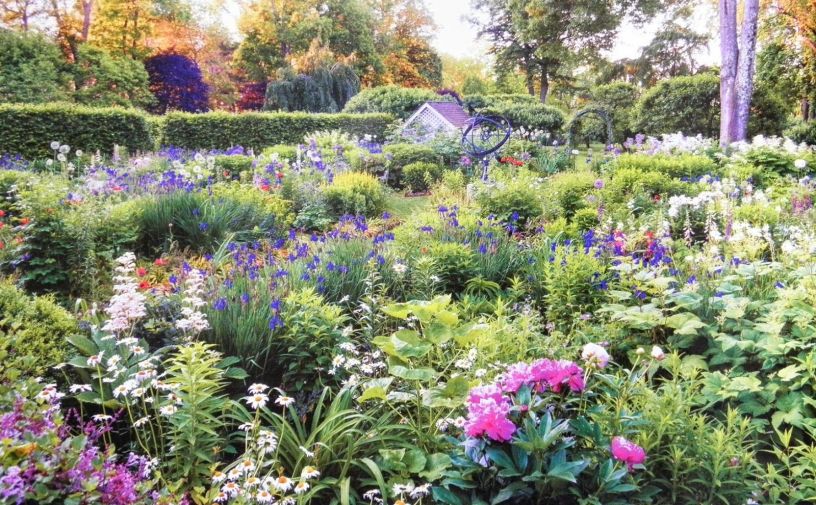
So how can the joys of gardening lead to a happier life? For starters, gardening is a true solitary activity. You don’t need anyone to do it for you or with you. That way, you can set your own designs and decide how you want your garden to be. Let your gardens be wild and rambunctious, or groomed and organized. Plan it out or just throw a bunch of seeds and see what happens. Regardless of your reasons for gardening there really isn’t a downside to it. So start today, invest in some time and money, and soon you’ll have a small feast that’s beneficial to you, the planet, and the environment around us.

10 HAPPIER BENEFITS TO GARDENING:

1 – Grow for food – Back in the days before grocery stores were abundantly available, people grew their own food in their backyards, front yards, and inside their homes. Food such as tomatoes, bell peppers, and apples were expensive and difficult to get in stores. The scarcity of certain fruits and vegetables were also a factor in growing your own food. Now, with the rising costs of inflation many fruits and vegetables are also expensive and not very tasty. In fact, growing your own basic fruits and vegetables might be more cost effective in the long run. You end up with a hefty bounty of delicious food that can serve the whole family and maybe even your neighbors. If you’re a beginner gardener or don’t have enough space outdoors, you could try growing in raised planters or large garden pots like this Galvanized Raised Garden Bed from Amazon and a handy beginner’s guide book (sponsored links).

Galvanized Raised Bed2 – Mindfulness Gardening – Gardening can be simple or complex. But to truly put your mind into gardening requires a bit of self reflection. Ask yourself the 3 W’s: Why, Where, When. Why do we garden? Is it for food sustainability or to show off to our neighbors, friends, and family? Where do we want our garden to grow best? Outdoors in the ground, in planters and pots, or indoor only? When do we take care of our garden? If you’re like me, you’d want to be outside in your garden all day long. Take some moments to think about the kind of garden you want. Envision what your garden will look like 2 or 3 months down the line. Do you see tons of fresh carrots and cabbages ready to be plucked and eaten? Or do you see gorgeous orange-yellow Sunflowers dancing in the light summer breeze? Whatever reasons you may have for starting a garden, try to create a safe place for you to relax and enjoy nature.

3 – Beneficial to Children – Children are like sponges. They soak up everything around them especially when they’re young. If you want your children to develop a love for gardening then you must model that behavior. I took my son to garden centers and arboretums when he was an infant. I wanted him to experience the same – if not similar – enjoyment when I’m surrounded by plants. As he got older, I gave him opportunities to grow his one plants with easy to grow flowers, herbs, and vegetables. Whenever I went out to our garden I took him with me. Sometimes he stayed longer, other times he got bored. The main idea is to get children to develop an appreciation for nature and that includes plants, animals, insects, and the world around them. Here’s another fun Raised Garden Bed on wheels (sponsored) that would be wonderful for kids to manage on their own:
Raised Garden Bed on Wheels

4 – A Great Escape – No, I’m not referring to any magic tricks, although, *ahem* gardening is magical to me. Rather, I’m offering you a chance to escape from your daily worries and troubles. There is scientific and data-based proof that gardening and taking care of plants can improve one’s mood and health: https://www.ncbi.nlm.nih.gov/pmc/articles/PMC4419447/

We live in a world with constant stress and anxiety, and some are worse for others. So what’s the best way of relieving daily stress? Why, gardening of course! Even if you don’t have the space or time for an abundant yard full of fruits and flowers, you can grow something as simple as fresh herbs on your windowsill and breathe in the fresh, therapeutic scent each day. Having some kind of garden is a paradise waiting to happen.

5 – Be a Pal to Beneficial Insects – You might think, “yikes, be friends to insects?!” How can we be friends to insects that most of us consider as pests? It all depends on your perspective and of course, the real reasons to keep beneficial insects around your garden. Insects such as butterflies, bees, ladybugs, and praying mantis are considered nature’s pollinators. Pollinators help to pollinate (the act of transferring pollen from one plant to another) almost all of our entire food system. Without certain pollinators we would not be able to enjoy healthy and delicious food such as apples, strawberries, cucumbers, watermelon, potatoes, and so forth. Plus, seeing adorable bumblebees with their fluffy yellow body working throughout your garden is a delight. In the end, your plants are happy, the insects are happy, and you are happy with an bounty of fully grown plants. I like to give my little pollinators a place to rest and sip some water. You can create your own bath plate which is similar to a Bird Bath(sponsored), or find a pretty one to put in your garden.

Decorative Bird Bath

6 – Find Your Zen – You know those people who never get angry, never let anything bother them, and always seem to be at peace when thrusted with frustrating circumstances? Yes – there are people like that in our universe. But why are they always at peace, offering you sagely wisdom with a calm aura around them at all times? It’s because they found their inner “Zen”: a state of inner calmness and acceptance. The next time you’re out in your garden, I want you to take some moments and practice finding your Zen. Clear your mind and thoughts but don’t be afraid of thoughts running rampantly in your mind. Just let those thoughts wander away on their own. Picture your surroundings in your mind. Breathe in the air around you. Do you smell the fragrance of your beloved plants? Do you feel their presence? Once you are attuned to your garden, it will be easier to find that inner peace and solitude in your garden space.

Perhaps that is the zen of gardening—you become one with the plants, lost in the rhythm of the tasks at hand.Irene Virag

7 – Build What You Love – The art of gardening or horticulture requires one’s own sense of gratitude. Be happy with what your garden brings you, regardless if you failed a dying tree or seeds that never grew past their seedling stage. Your garden should be based on what YOU love to do in it. Do you want a garden where pollinators visit? Or a garden where you grow mostly food for your family? Or even a garden that even Martha Stewart envies? If you build a garden with the plants, decor, and theme that you love, then you will surely find much happiness there, no matter the time of day you embrace your garden.

8 – It’s Okay To Be Alone – We all fear of being alone or lonely sometimes in our lives. But when you have a garden or even a small patch of land for your plants, you’re never truly alone. As I said earlier, gardening is a solitary activity. It is a fulfillment that only one who gardens truly understand. When I feel sad, angry, or stressed, I wander outside to my ever growing garden and I stand there for a moment, letting the moment seize me. My thoughts immediately drift to how my cherry tomatoes are doing, checking vigorously for any bad worms or bugs, while excitedly eyeing my eggplants to see if they grew from the day before. My garden is filled with flowers, vegetables, herbs, and fruit, and they are all alone in their own little world. I too am like my plants – solitude and alone yet not really alone while I’m out there with them.

9 – Embrace Change – Change can be a good thing. An evolving, heightening, abrupt movement through life that can be both cataclysmic and fortuitous. It’s when we embrace the changes that happen that we can become enlightened. The same theory applies to your garden. Your garden will evidently change throughout the days, seasons, and years. Your garden can grow exponentially or dwindle down drastically. If you allow your garden to grow in your environment then you too will grow and see positive changes.

10 – To Teach Others Is To Gain Infinite Knowledge – My mom was a teacher for many years. She taught students of various ages and backgrounds. She once told me, that when I teach others my skills and knowledge, I too will grow with my knowledge. At first I didn’t understand her meaning, but when I started teaching gardening, horticulture, and environmentalism to elementary students, I wanted to learn more about what I was teaching them. One should never truly stop learning and growing. Same should be said for your gardening. When you grow a zucchini from seeds and finally have a bountiful harvest, give some to your friends and relatives. Let them know the techniques to growing your vegetables. Enlighten others on your experiences with growing and sometimes, failing your plants. Don’t be afraid to answer “I don’t know” because it can lead you to finding that answer. In the end, our knowledge is what will enlighten us.

Here are some suggestions to help you grow your garden and find much joy and happiness in it:

Books on gardening: ” Up in the Garden and Down in the Dirt: (Spring Books for Kids, Gardening for Kids, Preschool Science Books, Children’s Nature Books) (Over and Under) Hardcover – Picture Book:  https://amzn.to/44uyKOM”

How to Grow Vegetables in Pots & Containers: 9 Steps to Plant & Harvest Organic Food in as Little as 21 Days for Beginners (The Urban Farmer Series) Hardcover”

Raised-Bed Gardening for Beginners: Everything You Need to Know to Start and Sustain a Thriving Garden – Hardcover” 


Patio furniture: Greesum 4 Pieces Patio Furniture Set, Outdoor Conversation Sets for Patio, Lawn, Garden, Poolside with a Glass Coffee Table, Black

Homall Outdoor Indoor Use Backyard Porch Garden Poolside Balcoy Sets Clearance Brown and Beige 4 Pieces Furniture

Folding Adirondack Chair Patio Chairs Lawn Chair Outdoor Adirondack Chair Weather Resistant for Patio Deck Garden, Backyard Deck, Fire Pit & Lawn Furniture Lawn Seating – Blue

Tools for garden and yard: Olmsted Forge Garden Tool Set, 5 Pieces, Heavy Duty Powder Coated Steel, Cork Handle

Oizen Goatskin Leather Gardening Gloves for Women, Thorn Proof Working Gloves for Weeding, Digging, Planting, Gardening Gifts

Foyuee Raised Planter Box with Legs Outdoor Elevated Garden Bed On Wheels for Vegetables Flower Herb Patio


*** Disclaimer: Please note, that as an Amazon Associate I might earn from qualifying purchases made from links on this site. I am just starting out as an Amazon Affiliate, so please bear with me as I learn :). I’m just supplementing some extra income for my addiction to gardening 🙂

Disclaimer: The product(s)were sent to the author for review by the manufacturer/PR. All reviews on “Happymomblogger” remain unbiased and unpaid and are the sole decision of the author. The opinions of these product(s) were not influenced in any way, shape, or form. As always, please read the ingredients carefully when trying new products.

Please read the labels and ingredients carefully and follow all manufacturer’s instructions (if any). The products selected for the giveaway were generously donated by the companies/PR to help readers learn more about their products. The winner’s choice in using/consuming these products are entirely up to the winner and will not hold the author and her family liable nor the companies/PR liable. These products are made with non-toxic ingredients but always be safe with what you use and consume.

http://www.topmommyblogs.com/blogs/in.php?id=storm


The Happy Factor 2018 – Why Some People are Happier Than Others (and what to do if you’re not)

Why are some people inherently happier than others? Does it start at childhood where children first learned at home with their parents? More importantly, why does it seem that children are happier than most adults? If you could recall a happy time in your childhood, you’d probably think of many occasions. But as we get older and responsibility starts to set in, we push happiness to the background and let other things get in the way.

Famous Greek philosopher, Aristotle once said, “Happiness depends on ourselves,”. He asserted that happiness is a long-term goal—achieved throughout the course of a lifetime—rather than something that promises instant gratification. While this may hold more accurately for adults – based on experiences – we can also teach our children to apply this ethic to their lives; teaching them that happiness can be long term and comes from within. There’s something to be said about choosing one’s own happiness, for being happy truly is a choice. It’s not always about status or money or getting the best things. Happiness stems from the innate desire to let things go, to not dwell on things or circumstances that can drag us down.

In a 2012 article for Harvard Business Review titled “The History of Happiness”, history professor Peter N. Stearns  of George Mason University stated that while happiness seemed to have improved over the years due to incline of social and cultural status as well as improved health systems, it is a perceived form of happiness that stems from possessions of things rather than something else. And that something else is “that happiness depends on ourselves and not on our circumstances.” But throughout the recent years happiness has also seen a gradual decline and that seems to stem from “poor social support, both governmental and associational.”

Happiness is difficult to measure and can range from person to person, and even day to day. Modern studies expand on Aristotle’s work by focusing less on what happiness is and more on how happiness can be increased and sustained in our lives. According to Sonja Lyubomirsky, PhD, a psychology professor at University of California–Riverside, conducts most of her research in a relatively new field called “positive psychology”. She estimates that only 10 percent of our happiness is attributable to external circumstances like socioeconomic status, marital status, ethnicity, religious beliefs and age. This seems counterintuitive; people tend to assume circumstances play a much larger role in our happiness. But Lyubomirsky asserts there’s a wealth of evidence to support her conclusion, including a study showing that “Americans who earn more than $10 million per year are only slightly happier than nonwealthy office or blue-collar workers.”

So how do we become happier, you might ask? Is it from becoming wealthier and a rise in social status? Or is it living humbly with less possessions to worry over? In a research conducted by Professor Lyubomirsky, she found that truly happy individuals construe life events and daily situations in ways that seem to maintain their happiness, while unhappy individuals construe experiences in ways that seem to reinforce unhappiness.

If you look at the pie chart above, happiness can be mostly controlled by our own actions rather than our circumstances. And while we can’t really do much with our genetic disposition, we can do things in our daily lives to live happier. Things such as doing acts of kindness, nurturing your social relationships and learning to forgive those who have hurt you all help in the long run. These are wonderful lessons to learn for adults, but what about with children? Very young children are still learning that their actions cause consequences which may affect their lives and those around them. That is why it’s crucial for children to learn at a young age that the things they do or say can hold great impact. Children learn best by hands on experiences and every thing they experience and see is a learning lesson.

Below are some ideas you can do to be happier. While you can not always seek happiness, practice these exercises daily to help you get a better and healthier life:

  • Practice mindfulness. It is a state of being aware of the moment and who you are. Take your time to enjoy the simple things in life such as delicious food, beautiful artwork, or a great book.

  • Be in nature. Being out in nature such as mountains, parks, and oceans, help connect us to what is innate. We are all a part of nature and if we listen closely, we can hear the trees rustling, feel the gentle breeze that caresses a flower, and see the waves move symbiotically with the wind.

  • Be kind. The easiest and yet the hardest thing to do is be kind when you are facing adversity. It’s easy to be kind when things are going well but it’s even more important to remain kind when things are not. Be kind to yourself and be kind to especially those who need it.

  • Reduce screen time. In this new age where practically everyone has some kind of electronic equipment on them, learn to reduce the limit of such distractions so that you don’t become dependent on them. Keep your phone with you but don’t make it a bad habit of checking it every 3 seconds. Don’t spend all of your downtime watching videos on your tablet or laptop. And set timers for your children to limit their usage as well.

  • Be proactive. Make plans ahead of time by writing them down so you can have access to your list. When you have an idea of what you are going to do today or a week from now, you won’t feel as stressed when that time comes.

  • Eat healthy foods. Nutritious foods such as vegetables and fruits are full of important vitamins and minerals to keep your mind and body healthy. When you’re sick, your natural mental and physical states could cause more distress and stress.

  • Limit alcohol or cut out alcohol. Alcohol is a temporary fix and can only give you a temporary idea of happiness. Plus, it will drastically ruin your health and livelihood if you become dependent on it.

  • Get plenty of health-inducing exercise. Taking relaxing walks, gentle running, and any kind of health building exercises such as Taiji and Yoga will help you long term. Try to limit excessive weight lifting and anything that can tax your body.

  • Think positively! There can always be something that can get in the way of your inner happiness and peace. Remember that you are in control of your own actions and no one should dictate whether you should be happy or not.

If you have children, whether young, old, or in between, remind them of some of these practices. Children are like sponges – they soak up everything around them so show them and teach them that happiness begins within themselves and they’ll grow to appreciate the little things in life when they’re older.

*Sources: :Delicious Living Magazine/New Hope Network


Disclaimer: The product(s)were sent to the author for review by the manufacturer/PR. All reviews on “Happymomblogger” remain unbiased and unpaid and are the sole decision of the author. The opinions of these product(s) were not influenced in any way, shape, or form. As always, please read the ingredients carefully when trying new products.

Please read the labels and ingredients carefully and follow all manufacturer’s instructions (if any). The products selected for the giveaway were generously donated by the companies/PR to help readers learn more about their products. The winner’s choice in using/consuming these products are entirely up to the winner and will not hold the author and her family liable nor the companies/PR liable. These products are made with non-toxic ingredients but always be safe with what you use and consume.

http://www.topmommyblogs.com/blogs/in.php?id=storm