Jolly Llama – Products Worth Reviewing and Giveaway

We love fruits in our household and we love to eat it in as many ways as possible. Fruits are undoubtedly one of the best things for you and they are super delicious too! You can eat them freshly-picked, diced up in salads, dipped in chocolate, blended into smoothies, and in the case of Jolly Llama, made into a fruit squeezups. What are fruit squeezeups? They are whole fruit sorbets that are fun to eat, good for you, and full of important vitamins in each serving. Jolly Llama’s fruit sorbet squeezeups are a great alternative to ice-cream and popsicles and the fun shapes make it easy for little kids to hold onto. And since they also contain at least 50% of your daily Vitamins A&C, your kids won’t know that they’re also good for them!

Sometimes it may be hard to get your kids to eat their fruits and vegetables. Heck, it may be hard to get an adult to eat their fruits and vegetables! So sometimes as moms and parents, we have to be sneaky in adding essential fruits and vegetables into our children’s diets. But doing so requires a lot of creativity and planning. My best advice is to always start them off at an early age. I gave my son fruits and vegetables when he was old enough to eat them and since I eat them on a daily basis as well, he’s really come to love and enjoy fruits and vegetables. For some kids though, it seems like they’d rather snarf down cookies, chips, and french fries and call that a meal. So if you’re worried about your kids not eating enough fruits and vegetables in order to get their daily doses of vitamins, you can get creative with how you serve them. One way to try is with Jolly Llama’s fruit sorbet squeezeups.
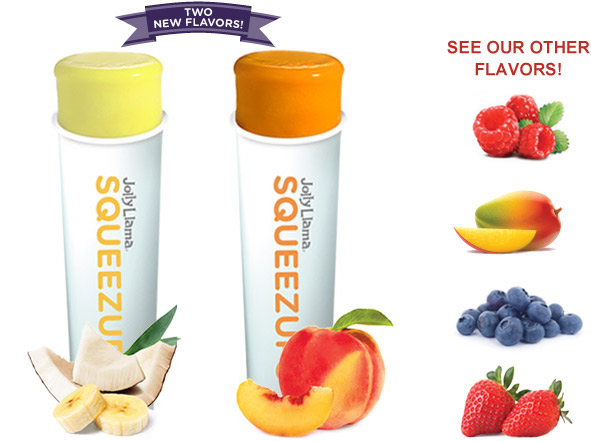
Jolly Llama’s fruit sorbet squeezeups are made with whole fruits and their current flavors include Peach, Banana Coconut, Strawberry, Rasberry, Mango, and Blueberry. And although they do contain some evaporated cane juice, you can decide on how much to give your kids. I usually give my son 1 Jolly Llama fruit sorbet squeezeups at least once per week, but since he doesn’t eat that much sugar anyway, it’s not too much of a big deal with me. They are definitely much healthier than the conventional popsicles you can find anywhere and with actual fruit in them, you can be sure that your children are getting at least some kind of fruit in them. With Jolly Llama’s unique recipe of using only whole fruits, the essential nutrients are retained in the sorbet squeezeups so it’s pretty much like eating a whole fruit!

Jolly Llama (http://thejollyllama.com/) got their cute name after a visit from the Dalai Lama and with the founder’s childhood love of llamas, voila! – the Jolly Llama name and company was born. The owner and creator of the company started as a prominent chef and with his fondness with using only fresh and natural ingredients in his culinary creations, he knew he must do the same with his frozen sweet treats. With a background in creating unique and healthy recipes and his knowledge of the ice cream business, he and his partner created Jolly Llama and now you can find Jolly Llama in natural grocery stores including Whole Foods Market. Jolly Llama’s frozen fruit squeezeups currently comes in six delicious flavors such as Peach Sorbet, Banana Coconut Sorbet, Strawberry Sorbet, Rasberry Sorbet, Mango Sorbet, and Blueberry Sorbet. My son and I are not big mango eaters but there is something truly unique and refreshing about the Mango Sorbet. But our all-time favorites are the Strawberry Sorbet and Blueberry Sorbet. And all of their frozen squeezeups have delicate bite-sized pieces of the actual fruits so it’s a lot of fun eating them too.

My son and I were incredibly delighted to receive some free product coupons to try and review Jolly Llama. We saw them before and were already eager to try them so we picked up a couple of boxes of our favorite flavors. Their frozen fruit squeezeups come in a fun cone shape and they’re easy to hold onto for little hands. And with each squeeze, it’s fun to squeeze them out and when it starts to melt, you can just drink them like a fruit smoothie. The good folks at Jolly Llama would also like to give 3 LUCKY readers of Jolly Llama the opportunity to try their frozen fruit squeezeups.  The winners will receive 1 FREE product coupon to pick out their own flavor. Before you enter, be sure to check their store locator to see if there’s a store nearby that sells Jolly Llama (http://thejollyllama.com/where.php). So how do you win this super refreshing prize? Read below to find out!

Here’s how to enter in the Jolly Llama giveaway:

(Please note, the rules have changed slightly. Please read carefully before entering)

ENTRIES:

#1 entry – “Like” Jolly Llama on Facebook: http://www.facebook.com/TheJollyLlama and write on their wall that you are entering the contest at Happymomblogger: http://www.happymomblogger.wordpress.com/. Please put Happymomblogger as the heading.

ADDITIONAL ENTRIES: 

#2 entry – Become a follower: http://twitter.com/#!/happymomblogger and “Tweet” me @happymomblogger that you are entering the Jolly Llama giveaway. Become a follower of Jolly Llama: http://twitter.com/#!/TheJollyLlama and “Tweet” that you are entering the contest at Happymomblogger.

#3 entry – Subscribe to my Blog.

#4 entry – Enter in my other contests.

#5 entry – Vote for me at Top Mommy Blogs using the link provided below.

You can enter by telling me the 5 entries in the LEAVE A COMMENT box. Please be sure to give me your name and email address so that I may contact you if you win. Contest is open to residents of US only. 18 years and older please. Please be sure to provide a physical address and not a P.O. Box. Only 1 contestant per household please. Please allow 4-6 weeks for delivery of prize. Any violation of the rules will deem your entry as disqualified. Happymomblogger is not responsible for lost, stolen, or damaged prizes but will do the best to ensure your prize gets there. In the event the winner can not be reached within 3 days of email sent then another winner will be chosen. You can only win 1 prize per giveaway period. No purchase necessary to enter. Void where prohibed by law.

Contest Start Date: April 19, 2012

Contest End Date: May 3, 2012 – Congratulations to Joann and Layne for winning the prize!

Only 3 winners will be chosen at random and I will post the winners names on my blog.

GOOD LUCK AND THANK YOU FOR PARTICIPATING!

Disclaimer: The product(s)were sent to the author for review by the manufacturer/PR. All reviews on “Happymomblogger” remain unbiased and unpaid and are the sole decision of the author. The opinions of these product(s) were not influenced in any way, shape, or form. As always, please read the ingredients carefully when trying new products. 

Please read the labels and ingredients carefully and follow all manufacturer’s instructions (if any). The products selected for the giveaway were generously donated by the companies/PR to help readers learn more about their products. The winner’s choice in using/consuming these products are entirely up to the winner and will not hold the author and her family liable nor the companies/PR liable. These products are made with non-toxic ingredients but always be safe with what you use and consume.

http://www.topmommyblogs.com/blogs/in.php?id=storm

Clean Kids – Products Worth Reviewing

When it comes to cleaning your children’s hands, bodies, hair, and well, pretty much all over, we as parents resort to all sorts of personal cleaning products. But not all personal cleaning products are safe or good for little kids. There are countless displays of shampoos, body washes, and body lotions in the children’s aisle at your local grocery store but have you read the actual ingredients? Some of them are pretty yucky and can make you scratch your head wondering why they’re even on the shelves in the first place. Luckily for us eco-conscious parents, we can still find a good amount of non-toxic, safe, and good-for-you kids cleaning products out there – you just have to be diligent and read the labels and ingredients.

We came upon Clean Kids not too long ago after a search for something that smells great and is safe to use for my son. I think scents are an important factor when it comes to cleaning kids (not necessarily babies) because certain scents contain healing qualities and promotes certain moods and it’s also fun for kids to learn about new herbs, flowers, and plants. But it’s also important to purchase products that do not contain artifically-made fragrances because artificial fragrances have been known to cause allergic reactions in some babies and children (as well as adults). With Clean Kids, they use only plant extracts for scents as well as for cleaning so you get the natural benefits of the designated plant. We really like their Germ Busting Soap which uses fennel and licorice root extracts to counteract germs on the skin. I know that fennel and anise have long been used as natural preservatives in food and they smell incredibly unique and fresh. Other ingredients like aloe and sage help soothe and relieve the skin as well.

Clean Kids (http://www.gabrielcosmeticsinc.com/index.cfm/category/4/clean-kids.cfm), which is a division of Gabriel Cosmetics, produces a comprehensive line of natural cleaning products for kids. Founded by a love of natural herbs and botanicals, the founder learned a great deal about holistic and homeopathic qualities that can be found in most plants and herbs. Using only all-natural ingredients derived from natural plant extracts in their products, Clean Kids has a great line of bodycare and hair care for kids that smells fantastic and works superbly! At Clean Kids, they promise to use only natural ingredients and their products are free of sulfates, parabens, gluten, phthalates, fluoride, lanolin, petrolatum, mineral oils, artificial colors, and are animal-cruelty free and vegan.


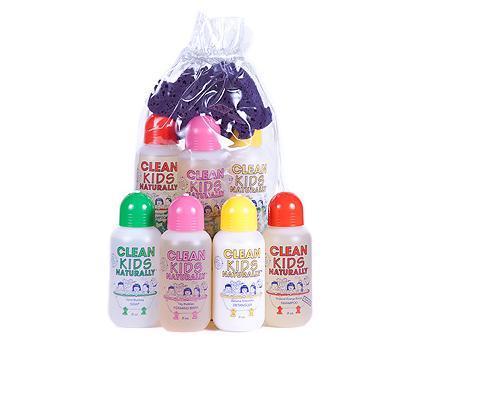
Clean Kids current lineup of kids cleaning products include Tropical Orange Burst Shampoo with red seaweed and various citrus as the highlights; Banana Smoothie Detangler which smells deliciously like bananas; Tiny Bubbles Foaming Bath which gets its natural foam from Soapwort Extract; and Germ Busting Soap which uses natural fennel extract to get rid of harmful bacteria. And I have to say, that my son and I love all of their products only because they are gentle to use, smells fantastic, and have certain therapeutic effects. Clean Kids/Gabriel Cosmetics had given us samples of all of their children’s body and hair care products and my son always asks for them whenever he bathes. We both love the fact that the shampoo lathers extremely well and the bubble bath creates a lot of natural, clean fun. And I love the fact that I don’t have to worry too much about toxic ingredients in Clean Kids children’s cleaning products. Clean Kids can be found in most natural grocery stores and are convenient and easy to use.

Disclaimer: The product(s)were sent to the author for review by the manufacturer/PR. All reviews on “Happymomblogger” remain unbiased and unpaid and are the sole decision of the author. The opinions of these product(s) were not influenced in any way, shape, or form. As always, please read the ingredients carefully when trying new products. 

Please read the labels and ingredients carefully and follow all manufacturer’s instructions (if any). The products selected for the giveaway were generously donated by the companies/PR to help readers learn more about their products. The winner’s choice in using/consuming these products are entirely up to the winner and will not hold the author and her family liable nor the companies/PR liable. These products are made with non-toxic ingredients but always be safe with what you use and consume.

http://www.topmommyblogs.com/blogs/in.php?id=storm

This Month with UL – The Dangers of CO Poisoning

We’re not superheroes. We don’t fly around in capes, we can’t stop a runaway train, and we can’t prevent a flood of water tumbling over a city. Our children like to think we’re superheroes and although we do the best we can to protect them, in reality, there are still so many dangers lurking around every corner. One of the ongoing and silent dangers lurking around is CO poisoning. CO, or Carbon Monoxide, is a colorless, odorless and poisonous gas and is a bi-product of incomplete burning of fuel – such as propane, kerosene, gasoline, oil, natural gas, wood and charcoal.  It can emit from faulty products, such as a gas stove, furnace or water heater. And because we can’t generally smell it or see it, it is one of the most dangerous poisons you can have in your home. And according to UL (Underwriters Laboratories: http://www.safetyathome.com/), it is a danger that kills 500 people and sends 20,000 more to the hospital each year.

Having children can be both rewarding and satisfying. But once you have kids, there are a whole lot of things you have to worry about. Besides worrying about illnesses or bullies or disobedience, there are many things to worry about just in your home. Safety at home should be the first priority because after all, you and your kids spend most of your time at home than anywhere else. That’s why we have to be even more diligent when it comes to safety at home and depending on the ages of your chidren, you’ll need to know what safety steps apply to the specific age. And just because as kids get older it doesn’t always mean they’re more aware of dangers in the home. At Underwriter Laboraties, they have made a priority to educate and inform the public about hazards at home and how to protect you and your children whereever you are. UL is a global leader in the industry of private and public safety research and awareness and you can see their logos on practically everything.

John Drengenberg, the Consumer Safety Director at UL, explained the importance of knowing the warning signs of Carbon Monoxide poisoning. He indicates that people most susceptible to CO poisoning are very young children, the very elderly and pregnant women. Even pets are affected the same way so don’t forget about the little puppy! As Drengenberg stresses, every home should have a working UL certified CO alarm. Place them in an area where it can be seen and heard, outside the bedroom doors, and preferably on every floor of the house. And if you suspect CO poisoning and you notice pets, or young children starting to show signs of improvement when outside of the home, you should have an expert evaluate your furnace, water heater and other fuel burning appliances.

Following are UL’s 5 guidelines for CO safety and warning signs:

– Know the signs: Look for streaks of carbon or soot around your fuel-burning appliance; the absence of a draft in your chimney (indicating blockage);moisture collecting on windows and walls of furnace rooms; and rust on the portion of the vent pipe. If you need assistance, you can always make a nonemergency call to your local fire department.

– Be Alert to symptoms: Flu-like symptoms of poisoning include nausea, fatigue, headaches, dizziness, confusion and breathing difficulty. Additionally, CO poisoning often causes a victim’s blood pressure to rise, and the victim’s skin may take on a pink or red cast.

– Home Installation: Ensure that your CO alarms are installed in the main areas of your home; it is recommended to have one alarm on every floor.

– Protect and Prevent: Purchase and install UL Listed CO alarms outside each sleeping area. The UL Listing on a CO alarm means the product has been found free of foreseeable hazards and is safer for your family.  Also, test the alarm monthly and replace the batteries in your CO alarms at least once a year.

– Get Out and Get Help: If the alarm sounds, the source of the alarm must be identified. Open a door and window, and get everyone out of the house.  Once you have your family outside, call emergency services and do not reenter your home until you are told to do so by the emergency services professionals.

We all love spending time inside our home and kids especially feel their home as the most solid form of attachment. So it’s important as parents to make sure we educate our children and our family about the dangers of CO poisoning. As Drengenberg stated, CO has become more forward facing in the media due to the fact that consumers are asking more questions about home safety and home repair. CO can often build up in a modern home more quickly because we all are trying to be energy efficient and sealing up our homes more tightly with better insulation, more calk and less drafty windows.  Furthermore,detecting CO poisoning in a person can be hard, since CO poisoning results in the same symptoms as the common flu. These symptoms may include headache, stomach aches, vomiting and fatigue. So Drengenberg suggests the best way to confirm one has CO poisoning is having a blood test done.

UL Listed CO alarms can be found and purchased at major home improvement stores such as Home Depot, Lowes, etc. as well as other major discount stores such as Target and Walmart. We purchased ours at Coscto and purchased a set for my parents as well. With more and more indoor hazards on the rise, it’s important to start now on installing your CO alarms in your home. For more information about CO safety and other safety tips from UL, please visit their website: http://www.safetyathome.com/.

All-Natural; What does it really mean?

It seems that almost every company today are claiming that their products are all-natural. You can find all-natural food, all-natural clothing, all-natural bedding, even all-natural hair coloring. But are these claims true? And what defines the word “natural”, actually? Webster dictionary describes natural as:  existing in or produced by nature : not artificial . So then what does artificial mean exactly? Well, Webster then defines artificial as: humanly contrived often on a natural model. So if you compared the two words, then it appears that artificial derives from nature. But good old common sense can tell you that artificial is usually man-made and not derived from nature. If all of this just sounds too daunting, then imagine what us as consumers can feel when it comes to buying natural products.

The natural food and products industry wasn’t very popular or prominent a few years ago. There was hardly a demand for them and the cost was too high. But as people across the world, and mostly in the United States realized the importance of eating more naturally, the business grew and became almost an overnight sensation. The government and private sectors all had an interest in the natural food and products industry and even mandated organic guidelines and labeling. However, the government has yet to mandate natural ingredients and that’s because there’s a fine line between what companies call their products as “natural”, and what us as consumers really think natural is. And the baffling part is – the owners, stockholders, and employees are also consumers, so wouldn’t they worry about their imprudent claims of their products being “all-natural”? Do they not serve those same products to their own families? Well, one would think so, but then money and power comes into play and us, the real folks who look for natural and organic products are left in the dust.

So how do you really know if a product is made from natural ingredients? In 1990, a law passed in the US that gave the FDA authority to require nutrition labeling of most foods regulated by the Agency; and to require that all nutrient content claims and health claims meet FDA regulations. The FDA is a pretty powerful agency within the United States Federal departments and when the Nutrition Labeling and Education Act (http://www.fda.gov/ICECI/Inspections/InspectionGuides/ucm074948.htm) was approved, I think most people rejoiced. Parents knew that the foods their kids were eating were going to be recognizable and they had a choice in whether to buy them or not – based on the list of ingredients. I, for one, always read the label of ingredients first before I buy anything and that goes for food, clothing, cleaning supplies, etc. But reading the labels can be a guessing game too especially when some ingredients do not use generic terms like, “whole wheat” or “apples”. In fact, some words that may look scary, like A. barbadensis is really just the aloe vera plant. So then how do you really know what is natural and why some people label ingredients using their Latin terms?

When it comes to food for instance, you should always make sure they are ingredients that don’t offer potential health risks down the line. For instance, artificial food coloring has certain dyes in them that can prove fatal for some people. Certain ingredients like aspartame, potassium benzoate, and high fructose corn syrup can cause harm to your liver and kidneys and make them work harder than necessary to process those toxic ingredients. Although some might argue that minimal ingestion is okay, when you think about it – if you ingest them minimally on a regular basis, then you’re taking in more than you normally should. And artificial ingredients do not have any essential nutritional benefits such as vitamins and minerals that your body needs to stay healthy. So when the big companies add nutritional content into their artificially-made food letting you think that you’re getting something better, well, you’re really not. Your best bet is to eat something that came from nature. After all, centuries of evolution proved to us that we as human beings, have learned something from our ancestors. And as we watch people get sick from eating too much junk we come to realize that eventually, we’ll have to make smarter food choices otherwise we might face health problems as we get older. My dad, who is a doctor, always conveyed his important message: “You may enjoy those foods now, but when your body gets older, you’ll regret it”.  But when we’re younger, we don’t really care whether that piece of chocolate cake was made from natural ingredients like whole wheat flour, eggs, and cocoa or made with Red 40 or Yellow 5 food dyes. And yes, as young and inexperienced as kids can be, there are many adults who are still oblivious to the dangers of artificial ingredients, or they simply don’t care. That’s why babies and young children need to learn early on that all those fun colors they see on their cupcakes and cookies aren’t necessarily good for them. Sure, they’re fun and tasty, but there are alternatives to those nasty ingredients.

That’s when the natural ingredients come in. Natural food coloring such as beets and purple carrots are used for many types of food such as beverages, frosting, and cakes and they are extracts of red beets and purple carrots. Much healthier than those old-fashioned synthetic food colorings and probably better looking too. Those bright red and pink colors on cupcakes were never really attractive to me in the first place and I steer clear from them whenever my son and I are grocery shopping. Other natural ingredients such as whole wheat flour are more beneficial to you than enriched wheat flour because whole wheat flour is made from the entire berry of the wheat which includes the bran and the germs and thus yielding all of its natural nutrients. Although enriched wheat was brought upon by a deficiency of vitamins and minerals in the US, if we eat food in their natural state, we are actually getting more out of them. Other favorite and popular natural ingredients such as brown rice flour, maple syrup, and sea salt are among the best-tasting ingredients you can find as supposed to artificial sweeteners, table salt, and white flour. And although table salt and white flour derives from salt and wheat, they are heavily processed and thus stripped of their natural nutrients, so in essence, they have become “man-made”.

So as we are getting more aware of natural food and natural products, we must also be aware of reading the labels on those natural food and products. Put the labels to good use – they’re there for a reason – so that you can make a sensible decision on whether to buy that or not for your kids. If you’re ever in doubt, look up the ingredients and determine if they are naturally-derived and if they are beneficial to your health. But be warned, there are also other natural ingredients that can harm you as well. My number one rule is – the lesser ingredients listed, the better. Unless the product your buying is meant to include more all-natural ingredients for taste and nutritional value. Some whole wheat breads contain not only whole wheat, but oat flour, barley, and honey for nutritional benefits.

And as much as we would love to cook all of our meals from scratch, in reality, we really can’t. Time, resources, money, they all factor into the convenience of buying food made by food companies. We just have to be wiser, look harder, and decide what is really natural enough for us and how much of it we should eat. After all, sugar is still natural, but that doesn’t mean we should be pouring it down our throats either. We as parents, even more so, must teach our children to eat more naturally and to make healthier food choices when they are grown up.

Now, how about those natural cleaning products? Well, that’s another story for another time!